Rugby Referee Impact on Betting: How Officials Shape Scoring and Discipline Markets
 Available in US

The Most Overlooked Variable on the Team Sheet Is Not a Player
A few seasons back, I noticed a pattern that changed how I approach totals markets. Two Premiership fixtures on the same weekend featured similar-quality sides, comparable venue conditions, and near-identical totals lines. One match produced 58 points. The other produced 29. The difference? The referees. One official averaged 22 penalties per match and was lenient at the breakdown; the other averaged 31 penalties and clamped down on every marginal infringement. The style of the referee shaped the pace, rhythm and scoring of each match in a way no other single variable could.
Referee impact on rugby betting is underappreciated because it requires a specific type of analysis that most bettors never undertake. You need to track individual referee tendencies over multiple seasons and then overlay those tendencies onto each fixture. It takes effort, but the edge it creates is persistent because bookmakers — even the sharpest ones — incorporate referee data imperfectly. Sports betting accounts for 57.1% of UK online gambling revenue, and the majority of that money is bet on match-winner and handicap markets where referee impact is secondary. In totals and discipline markets, referee tendencies are primary drivers that the market underweights.
Penalty Counts and Their Direct Effect on Totals
Every penalty is a potential three points if the kicker has range. In a match where the referee awards 30 or more penalties, the scoring from kicks at goal alone can contribute 15-20 points to the combined total. In a match where the referee is hands-off and awards 18 penalties, the kicking contribution drops to 8-12 points. That 7-8 point gap in expected kicking contribution is enormous relative to the totals line, which is typically set within a 2-3 point range of precision.

I track penalty counts per referee per season, updating the database after each round. The spread between the most and least penalty-heavy referees in the Premiership is remarkably consistent: the busiest referees award 28-32 penalties per match, while the most lenient average 18-22. That range holds from season to season, though individual referees can drift within it.
The tactical implications are equally important. A high-penalty referee creates a stop-start match rhythm that favours kicking sides and disrupts expansive attacking play. Teams that rely on multi-phase attacking sequences — recycling the ball through five, six, seven phases to stretch the defence — are disadvantaged by frequent stoppages because each penalty resets the defensive line. Conversely, sides with dominant set-piece platforms and accurate goal-kickers thrive under whistle-happy officials because every breakdown infringement becomes an attacking opportunity.
When I see a referee appointment that creates a significant mismatch between the match profile the bookmaker has priced and the profile the referee is likely to produce, I adjust my totals estimate accordingly and check whether the adjustment moves me to a different side of the over/under line.
Card Tendencies and the Discipline Markets
Yellow and red card markets are the purest expression of referee impact in rugby betting. Some referees reach for the card early and often; others manage infringements verbally and rarely escalate to formal sanctions. The difference is not subtle — across a Premiership season, the gap between the most and least card-heavy referees can be four to six yellow cards per match on average.
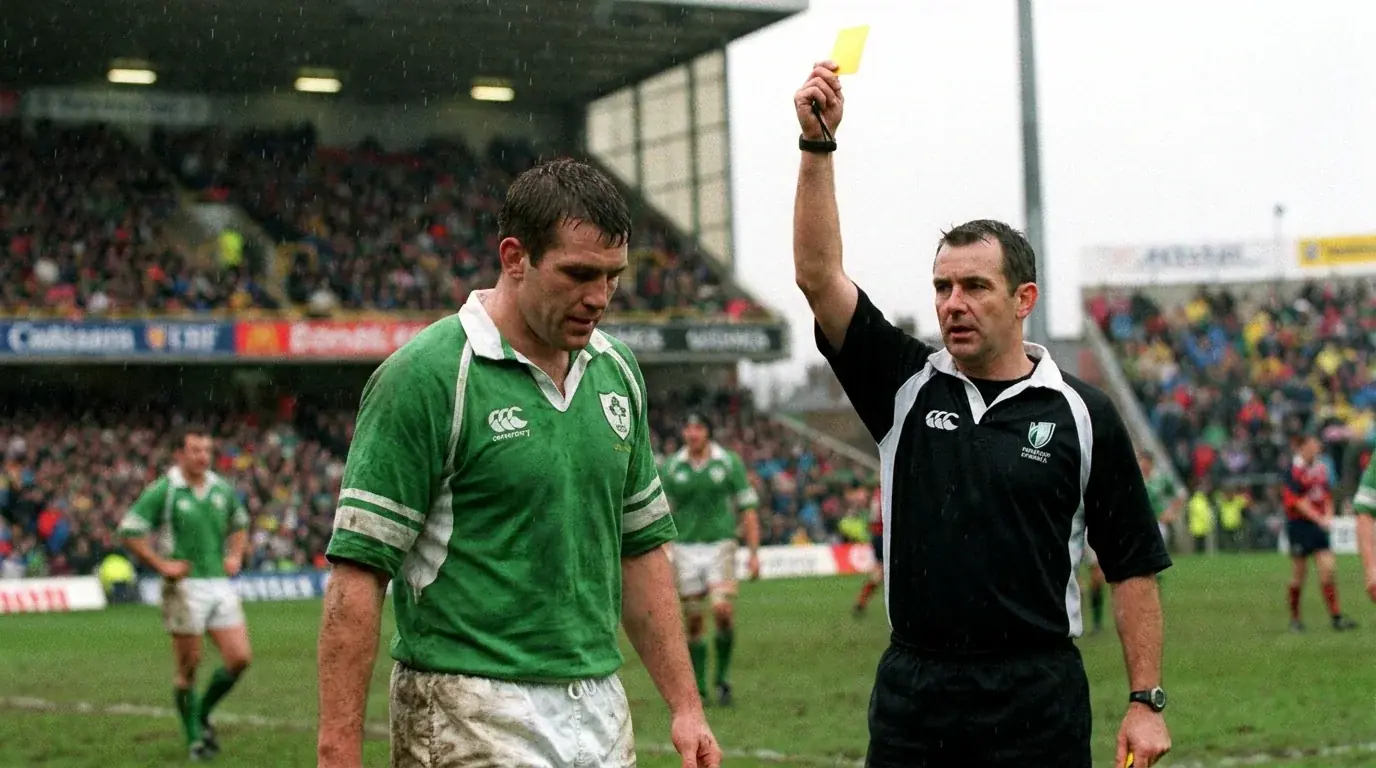
I started tracking referee card data seriously four seasons ago, and the patterns are stable enough to bet on. A referee who has averaged 3.5 yellow cards per match over 20 fixtures is not going to suddenly average 1.5 in the next 20. Style is entrenched through training, personality and the professional feedback loop that referees operate within. Match officials receive structured feedback from their assessors, and that feedback reinforces their existing tendencies more often than it transforms them.
The card markets I focus on are total cards in a match (over/under) and whether a specific side will receive a card. The over/under card line is typically set at 1.5 or 2.5 yellows, and the odds are priced based on competition-wide averages rather than referee-specific data. When a referee who averages 3.5 yellows per match is appointed to a fixture where the line is set at over 1.5 yellows at 1.55, the actual probability of exceeding 1.5 is closer to 85% than the implied 64%. That gap is value, and it appears almost every week during the Premiership season.
Red cards are too rare to bet systematically, but they are worth noting for in-play purposes. A referee who has already issued two yellows to the same side in the first half is operating in a heightened disciplinary mode, and the probability of a third yellow — or a red — is elevated relative to baseline. If you follow live markets, this information adjusts the in-play landscape in real time.
Breakdown Interpretation and Scrum Penalties
Where a referee draws the line at the breakdown — the contest for the ball after a tackle — shapes the entire character of a match. Some officials allow competing sides to contest aggressively, rewarding jackaling and slowing ball. Others penalise any player who is not on their feet within a fraction of a second, effectively removing the breakdown contest and favouring attacking sides with quick ball.


I categorise referees into two broad styles: breakdown-permissive and breakdown-strict. Against a breakdown-permissive referee, sides with strong fetchers (flankers who compete for turnovers) gain an advantage because their work at the ruck is rewarded rather than penalised. Against a breakdown-strict referee, those same fetchers become penalty liabilities, and the attacking side gets fast, clean possession that enables expansive play.
Scrum penalties follow a similar logic. Referees differ in how they adjudicate scrums — some penalise the team they judge to be causing the collapse, while others default to penalising the feeding side or reset the scrum repeatedly without awarding penalties. A side with a dominant scrum benefits disproportionately under a referee who actively penalises scrum infringements, because each penalty translates directly into territory and potential points. The Six Nations 2025 averaged 55 points per match, but that average obscures significant match-by-match variation partly driven by how individual referees interpreted the set-piece contest.
For any bettor looking to understand how different market types interact with these variables, rugby betting odds explained covers the mathematical relationship between implied probability and actual outcome probability in detail.
Sourcing Referee Appointment Data and Building Your Database
Referee appointments for Premiership and international matches are typically announced 48-72 hours before kick-off. For the Six Nations, appointments are published approximately one week in advance. This gives you a specific and actionable window: once the referee is named, you can overlay their historical tendencies onto the fixture and check whether the market has adjusted.

Building a referee database does not require professional tools. A simple spreadsheet tracking match, referee, total penalties, total cards, and total points is sufficient. After two seasons of data entry, you will have 40-50 matches per Premiership referee — enough to identify stable tendencies. I update mine weekly during the season, and the time investment is perhaps 20 minutes per round of fixtures. The return on that investment, measured in improved totals and discipline-market performance, has been the highest edge-per-hour of any analytical work I do.
Where can I find out which referee is appointed to a rugby match?
Premiership and Pro14/URC referee appointments are published by the respective competition organisers, usually 48-72 hours before kick-off. Six Nations and World Rugby appointments appear on the relevant governing body’s website approximately one week in advance. Match previews on major rugby news sites also list the appointed official as part of the match details.
Do referee tendencies change significantly over time?
Referee tendencies are stable over multi-season periods. An official who is penalty-heavy or card-heavy will typically remain so, though modest drift occurs as referees respond to seasonal directive changes from governing bodies. Track each referee’s averages over rolling 20-match samples and you will see that the core profile remains consistent even as absolute numbers shift slightly year on year.
Written by the editors at Rugby Betting Tips.