Pre-Match Rugby Betting Checklist: Ten Steps Before Every Bet
 Available in US
The Bettors Who Prepare Consistently Are the Bettors Who Profit Consistently
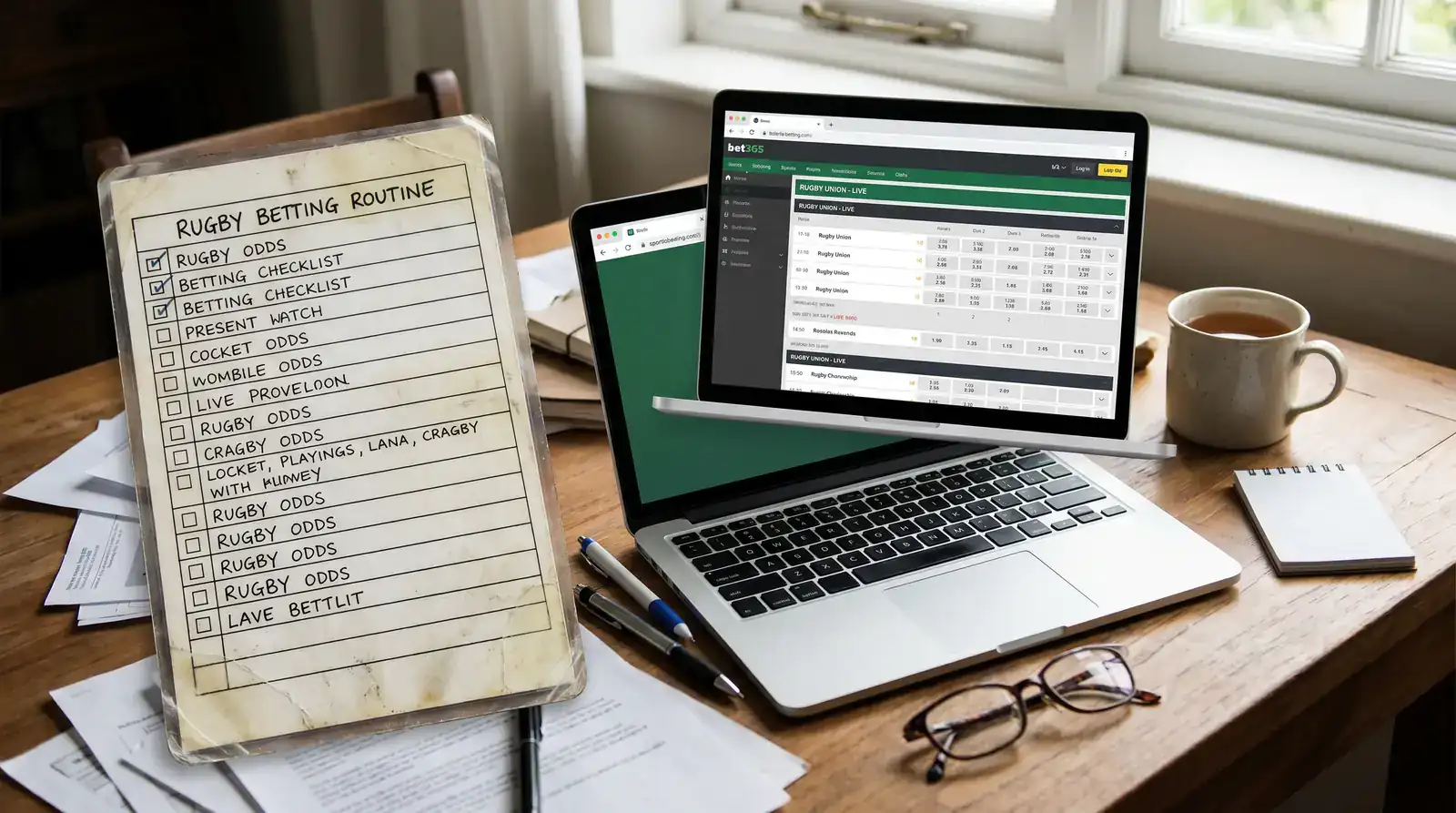
I keep a laminated card next to my laptop. Ten steps, printed in 14-point type. Before every rugby bet I place, I run through the card. It takes between eight and fifteen minutes per fixture, depending on the complexity. The card has been there for six years, and it is the single most valuable tool in my betting operation — not because the steps are revolutionary, but because the discipline of following them every time prevents the lazy shortcuts that cost money.
Most betting losses do not come from bad analysis. They come from incomplete analysis — from placing a bet before checking the team news, or ignoring the weather forecast, or failing to compare the odds across operators. A checklist eliminates those gaps by making every step mandatory rather than optional. It turns preparation from something you do when you feel diligent into something you do every time, regardless of mood or time pressure.
The ten steps below are not theoretical. They are the exact steps I follow for every rugby bet, refined over nine seasons of trial, error and incremental improvement. Adapt them to your own process, but do not skip any.
Steps One Through Five: Information Gathering
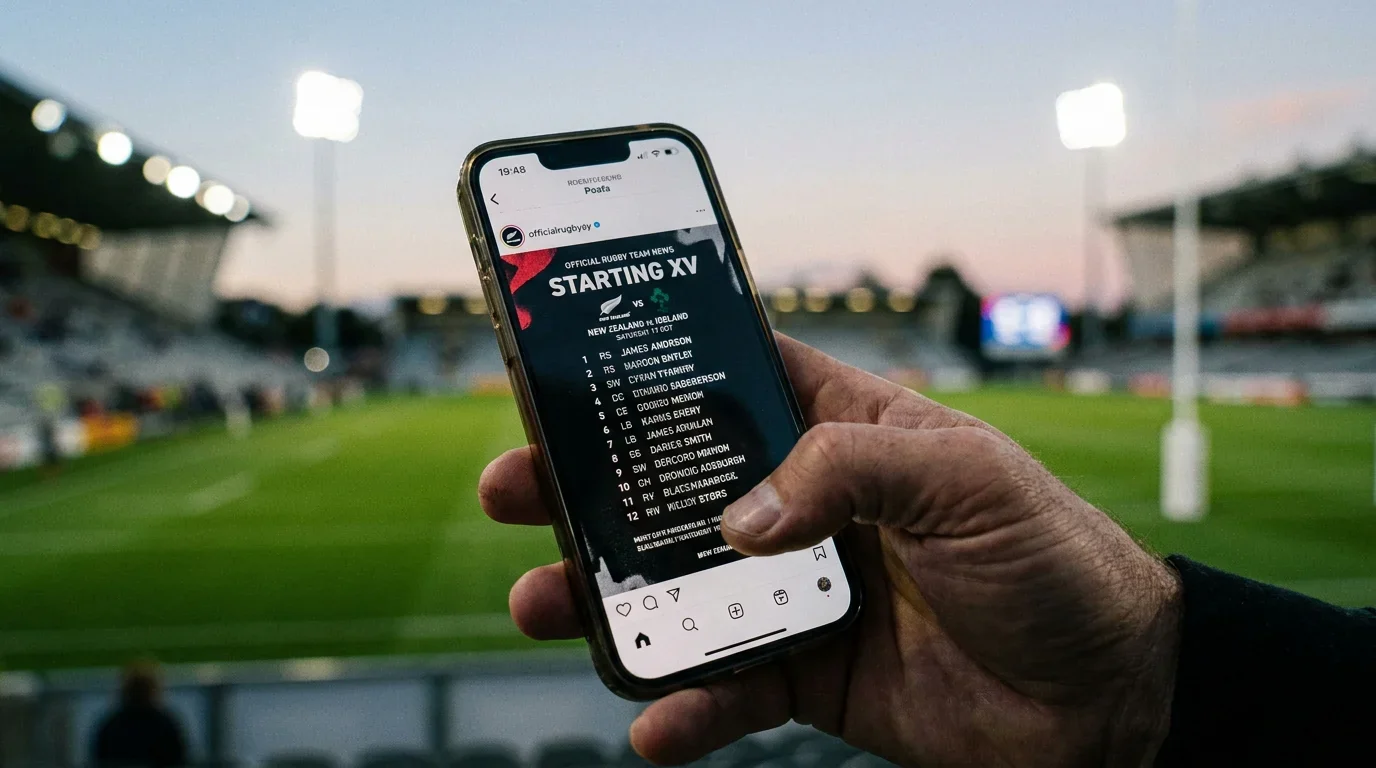
Step one: check the team news. This sounds obvious, but the timing matters. Official team announcements for Premiership matches typically arrive 24 hours before kick-off. For Six Nations and other internationals, squads are named earlier in the week but the matchday XV is confirmed later. I never place a pre-match bet until the starting lineups are confirmed, because a single key absence — fly-half, loosehead prop, first-choice goal-kicker — can shift the handicap line by 3-5 points. The Six Nations 2025 averaged 55 points per match, but individual fixture totals deviated significantly from that average partly based on which players were available.

Step two: check the weather forecast. I use two sources and look for agreement. If both predict rain, I adjust my totals estimate downward by 8-12 points relative to dry-condition baselines. If both predict strong wind, I adjust kicking-contribution estimates downward by 3-5 points. If the forecasts disagree, I note the uncertainty and reduce my stake size rather than ignoring the weather entirely.
Step three: review recent form for both sides. I look at the last six matches, weighted toward the most recent, with venue and opponent-quality adjustments. I am looking for trends — improving or declining trajectories — rather than raw win-loss records. A side that has lost three of its last four but reduced the margin in each successive loss is on a different trajectory from a side that has lost three of four by increasing margins.
Step four: check the referee appointment. I overlay the appointed referee’s tendencies — penalty count, card frequency, breakdown interpretation — onto the fixture. If the referee is notably penalty-heavy and both sides have disciplined records, the mismatch creates a totals adjustment. If the referee is card-heavy and one side has a poor discipline record, the cards market becomes relevant.
Step five: identify any scheduling or motivation factors. Is either side in a congested period? Is either side already qualified for the play-offs or already relegated? Is this a dead rubber at the end of the season? Motivation and fatigue do not show up in the statistical model, but they affect outcomes in ways that the model cannot capture. I note them as qualitative adjustments to my quantitative estimate.
Steps Six Through Eight: Market Analysis
Step six: run my expected points model. Using the information gathered in steps one through five, I generate an expected score for each side. The model produces a point estimate and a probability distribution. That distribution is the baseline for every market I evaluate.

Step seven: compare my model output to the bookmaker’s lines. I check the match-winner odds, the handicap line, the over/under total, and any relevant prop markets (cards, tryscorer, winning margin). For each market, I calculate whether my model’s probability assessment differs from the bookmaker’s implied probability by a margin large enough to represent value. My threshold is a 5-percentage-point gap for standard bets and a 3-percentage-point gap for high-confidence selections.
Step eight: compare odds across operators. Once I have identified a selection with value, I check the price at three to four bookmakers. UK bookmakers collectively handle around 290 million online sports bets per month, and the pricing variation between operators on the same selection can be significant — especially on lower-profile domestic fixtures. I place the bet at the best available price. If no operator offers a price that clears my value threshold, I do not bet, regardless of how promising the analysis looked.
Steps Nine and Ten: Execution and Record-Keeping
Step nine: determine the stake. My staking model allocates 1-3% of my current bankroll per bet, with the percentage scaled to my confidence in the edge. A standard bet — value threshold met, no unusual uncertainty — gets 1.5%. A high-confidence bet — strong model edge, corroborated by qualitative factors, best available price secured — gets 2-2.5%. I never exceed 3% on a single selection. This step is non-negotiable because it prevents emotional stake-sizing, which is one of the most common and costly errors in sports betting.

Step ten: log the bet. I record the fixture, the selection, the odds, the stake, my model’s probability estimate, and the reasoning behind the bet. This log is the raw material for monthly and seasonal reviews. Without it, I cannot calibrate my model, identify persistent biases, or measure whether my edge is stable, improving or declining.
The log also serves a psychological function. Writing down the reasoning forces me to articulate why the bet has value rather than relying on a vague sense of confidence. If I cannot write a clear, specific reason for the bet, I do not place it. That filter eliminates perhaps 20% of the bets I would otherwise place on instinct alone — and those instinct bets, historically, have been my least profitable category.
When the Checklist Says Do Not Bet
The most valuable function of the checklist is not identifying good bets — it is preventing bad ones. At least once per weekend, I run through all ten steps and arrive at step eight with no selection that clears my value threshold. The checklist says: do not bet this fixture. That is the correct output. Not every match offers value, and forcing a bet when the edge is not there is a guaranteed way to erode your bankroll over time.

I estimate that the checklist prevents me from placing two to three bets per month that I would otherwise have placed on incomplete analysis. At an average stake of 1.5% of bankroll, those prevented bets represent a meaningful saving — not because they would all have lost, but because they lacked the positive expected value that justifies the risk. Among UK adults, 2.7% score eight or above on the Problem Gambling Severity Index, and one of the clearest risk indicators is the inability to walk away from a betting opportunity. The checklist builds that ability into the process rather than relying on willpower in the moment.
The checklist is also a tool for managing the emotional pull of big events. Six Nations weekends, World Cup matches, Premiership finals — the occasions when you most want to bet are the occasions when the market is most efficient and the edge is hardest to find. The checklist treats a World Cup final identically to a mid-season Premiership fixture: run the steps, evaluate the markets, bet only if the value is there. If the biggest match of the year does not clear the threshold, you watch it as a fan rather than a bettor. That discipline is hard, but it is the discipline that separates profitable bettors from the majority who fund their activity. For a framework on building the analytical step of this process, rugby bankroll management complements the checklist by covering how to size your bets once the checklist has identified a value selection.
How long does the pre-match checklist take per fixture?
Between eight and fifteen minutes, depending on the complexity of the fixture and how much information you need to gather. The team news and weather checks are quick. The model run and odds comparison take longer. Over time, the process becomes faster as you develop routines and familiar data sources. The time investment is modest relative to the improvement in bet quality.
What if the checklist produces no betting opportunities for a weekend?
That is a valid and valuable outcome. Not every fixture offers positive expected value, and the checklist’s most important function is preventing low-edge bets that erode your bankroll. If a full round of fixtures produces no selections that clear your value threshold, the correct action is to place no bets. The next round will provide new opportunities.
Published by the Rugby Betting Tips team.