Rugby World Cup Betting Tips: Outright, Group and Knockout Strategy
 Available in US
The Biggest Prize in Rugby Betting Opens Months Before Kick-Off
I placed my first Rugby World Cup outright bet eleven months before the 2015 tournament kicked off. The side I backed finished as runners-up. That bet lost, but it taught me the single most important lesson about World Cup betting: the value is in the timing, not the pick. By the time the tournament starts, outright markets have tightened so much that the edge available pre-tournament dwarfs anything you can find once the pool stage is underway.
The Rugby World Cup is the biggest event on the rugby calendar and the most concentrated period of betting activity in the sport. The global sports betting market stands at $125.12 billion in 2026, and World Cup years consistently produce spikes in rugby-specific wagering across the UK. Bookmakers open outright markets as early as twelve to eighteen months before kick-off, and those early markets are where soft prices live. As the tournament approaches and public money floods in, odds compress toward their true implied probabilities and the margin tightens. Early entry is the structural advantage.
What makes the World Cup unique for bettors is the format: pool stages followed by knockout rounds. Each phase demands a different analytical approach. Pool matches are about relative strength, familiarity and form cycles. Knockout matches introduce a binary outcome under pressure, where experience and composure matter as much as ability. A side that cruises through its pool might freeze in a quarter-final, and that tension between regular-season performance and tournament psychology is where the most interesting betting decisions sit.
Outright Markets: When to Bet and When to Wait
I structure my World Cup outright activity across three windows, and I am strict about not betting outside them.
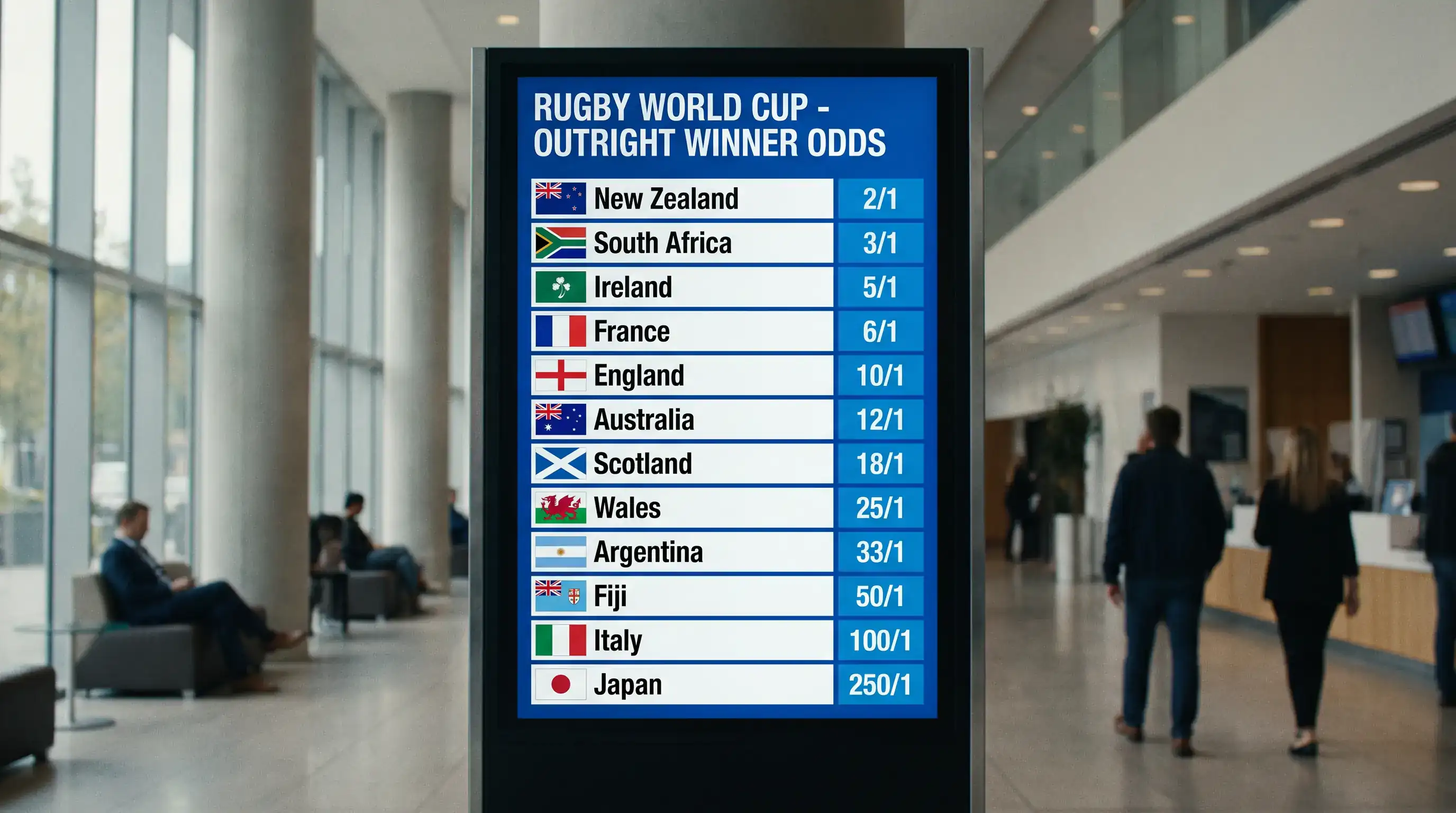
The first window opens 12 to 18 months before the tournament, immediately after the previous year’s autumn internationals. At this stage, the market is thin, bookmaker models are anchored to world rankings and recent form, and any side that has improved significantly during the autumn window will still carry pre-improvement odds. I look for sides that have made coaching changes, integrated a strong emerging generation of players, or shown a clear tactical evolution. The global rugby market is valued at $6.9 billion and climbing toward $11.9 billion by 2033 — that growth means more betting interest and sharper eventual odds, which makes early positioning even more valuable.
The second window is the Six Nations or Rugby Championship immediately preceding the World Cup. Tournament form under pressure is the best proxy for World Cup performance, and a dominant Six Nations campaign or a strong Rugby Championship showing can shift outright odds by 30-50%. If your early-entry side performs well in this window, you hold a bet at longer odds than the market now offers. If they disappoint, you can hedge by backing the emerging favourite at the new, shorter price.
The third window is the 48 hours after the final squad announcement. Squad selection tells you more than any warm-up match. A coach who selects three specialist opensides signals a breakdown-focused game plan. A side that picks four back-three players suggests they expect to rotate and manage workload through the pools. These tactical signals affect the probability of deep tournament runs, and the market does not always adjust fast enough.
Group-Stage Betting Angles That Recur Every Tournament
Every World Cup pool stage follows the same pattern: dominant teams dispatch weaker opponents in the early rounds, and the decisive pool match between the two strongest teams in each group takes place in the final round. That structure creates specific betting opportunities.
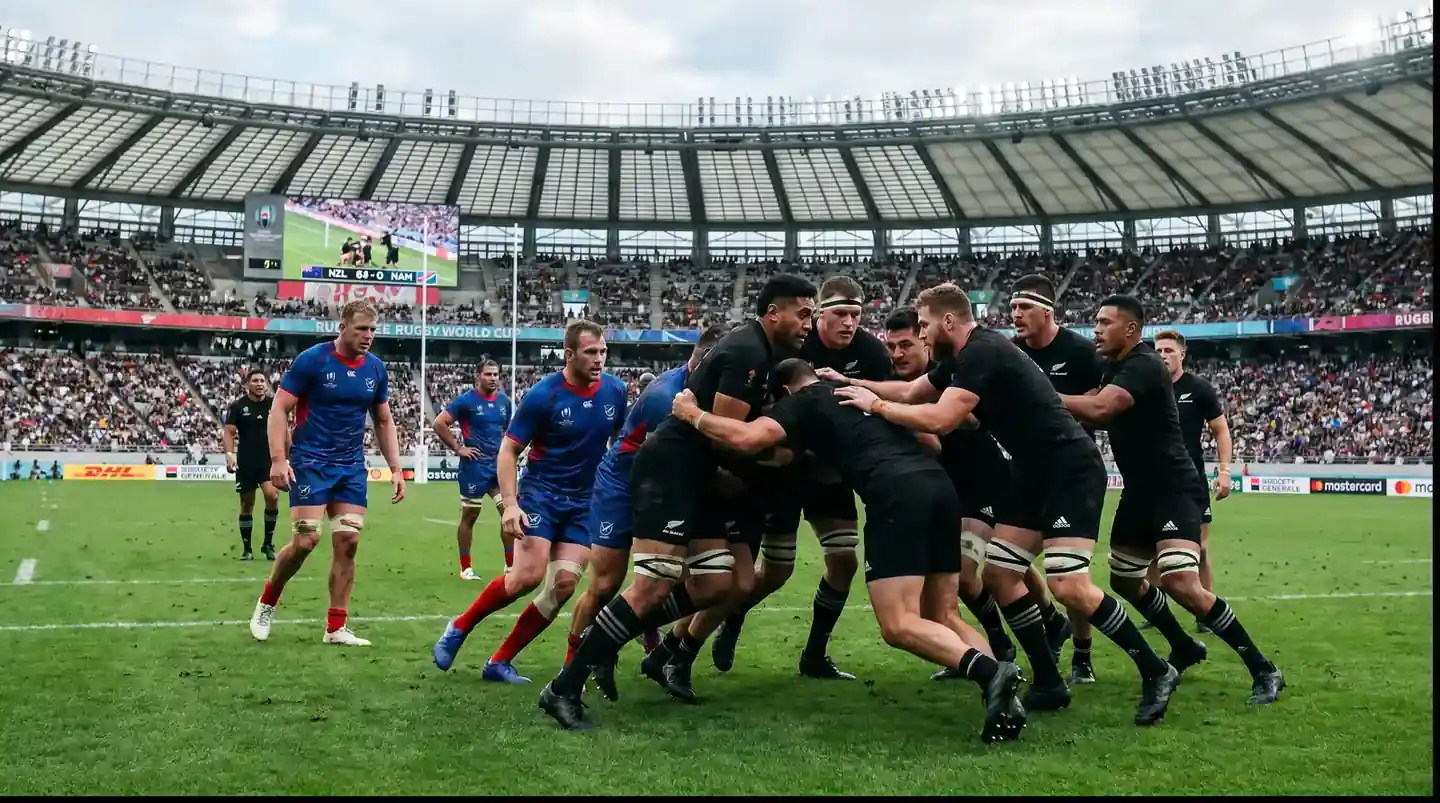
In the early pool matches — top sides against lower-ranked opponents — the handicap market is where the action sits. Lines stretch to 30, 40 or even 50 points, and the question is whether the dominant side has any incentive to keep scoring. In the first tournament match, the answer is usually yes — sides want to establish a bonus-point win and build confidence. By the third pool match, if qualification is already secured, the answer is often no. I back smaller handicaps in dead-rubber pool matches, because the favoured side typically manages minutes and intensity.
The marquee pool matches between the group’s top two sides are different altogether. These matches carry knockout-level intensity, and they frequently produce lower totals and tighter margins than the rest of the pool stage. My model consistently shows that unders and tight handicaps outperform in decisive pool fixtures. The pressure and stakes compress the scoring, even between two sides that play expansive rugby in their domestic leagues.
One recurring angle that I have profited from across multiple tournaments is the third-match letdown. A side that has comfortably won its first two pool matches and secured qualification often underperforms against a side that is still fighting for a quarter-final place. The qualified side is coasting; the desperate side is at maximum intensity. That motivational asymmetry is one of the cleanest signals in World Cup pool-stage betting.
Knockout-Phase Dynamics and How They Shift the Odds
Quarter-finals are where the World Cup really begins for bettors. The pool stage is a sorting mechanism; the knockout rounds are the tournament. And knockout rugby plays differently from pool rugby in ways that the betting markets do not always price accurately.
The most consistent pattern in World Cup knockout matches is defensive tightening. Across every tournament I have analysed, knockout-phase matches produce lower average totals than pool-phase matches. Coaches who are willing to play expansive rugby against lower-ranked pool opponents revert to conservative, territory-based game plans when elimination is at stake. Goal-kicking accuracy becomes disproportionately important. Penalty count becomes critical. A side that concedes cheap penalties under pressure gives away points and field position to a reliable goal-kicker, and that combination — pressure, penalties, goal-kicking — decides more World Cup knockout matches than flair or try-scoring ability.
The integrity and monitoring infrastructure behind World Cup matches is robust. Sportradar’s expanded agreement with FIFA involves monitoring across major global sporting events, and the same UFDS system that has tracked over 600,000 matches since 2017 applies its detection algorithms to World Cup fixtures. Andreas Krannich, Sportradar’s EVP of Integrity Services, has emphasised that sustained investment in technology and collaboration is essential to staying ahead of those who seek to corrupt sport. For bettors, that means confidence that the results you are betting on reflect genuine sporting outcomes — a baseline condition that matters more during high-profile tournament fixtures where manipulation incentives are highest.
Semi-finals and the final itself carry maximum stakes, maximum pressure and maximum conservatism. I consistently back unders in World Cup semi-finals and finals, and that approach has been profitable across multiple tournaments. The rare exception is when both semi-finalists play a genuinely expansive style — but even then, the tournament context usually compresses scoring compared to what those sides produce in domestic competition. For more on how Lions tours create a similarly pressurised tournament environment, British and Irish Lions betting follows comparable dynamics.
Building a World Cup Betting Portfolio
I treat World Cup betting as a portfolio rather than a series of individual bets. The outright entry is the core holding. Around it, I layer group-stage handicaps, totals in knockout matches, and tryscorer bets in the marquee fixtures where I have strong positional data. Each layer serves a different purpose: the outright captures the broad tournament view, the match-level bets generate returns regardless of which side wins the tournament, and the tryscorer bets exploit the high-profile matches where bookmaker margins are widest because public money inflates the favourite.

The discipline required is patience. The World Cup happens every four years. There is no weekly reset. A poorly timed entry or an emotional chase after a bad quarter-final result can undo months of careful positioning. My rule is straightforward: set the portfolio before the tournament, adjust only in response to genuine new information — injuries, suspensions, tactical revelations — and never increase stakes to recover a loss.
How far in advance can you bet on the next Rugby World Cup?
Most major UK bookmakers open outright markets 12 to 18 months before the tournament. Some offer ante-post odds even earlier, particularly after the previous World Cup concludes. The earliest markets carry the widest range of odds and typically offer the best value, because they are based on world rankings and recent form rather than tournament-specific analysis.
Do host-nation teams have a measurable betting advantage at the World Cup?
Historically, host nations perform better than their world ranking suggests, benefiting from home crowd support, familiar conditions and no travel fatigue. This advantage is partially priced into outright markets, but it tends to be underestimated in match-level handicap lines during the pool stage. The host advantage is strongest in pool matches and typically diminishes as the knockout rounds progress and opposition quality increases.
Published by the Rugby Betting Tips team.