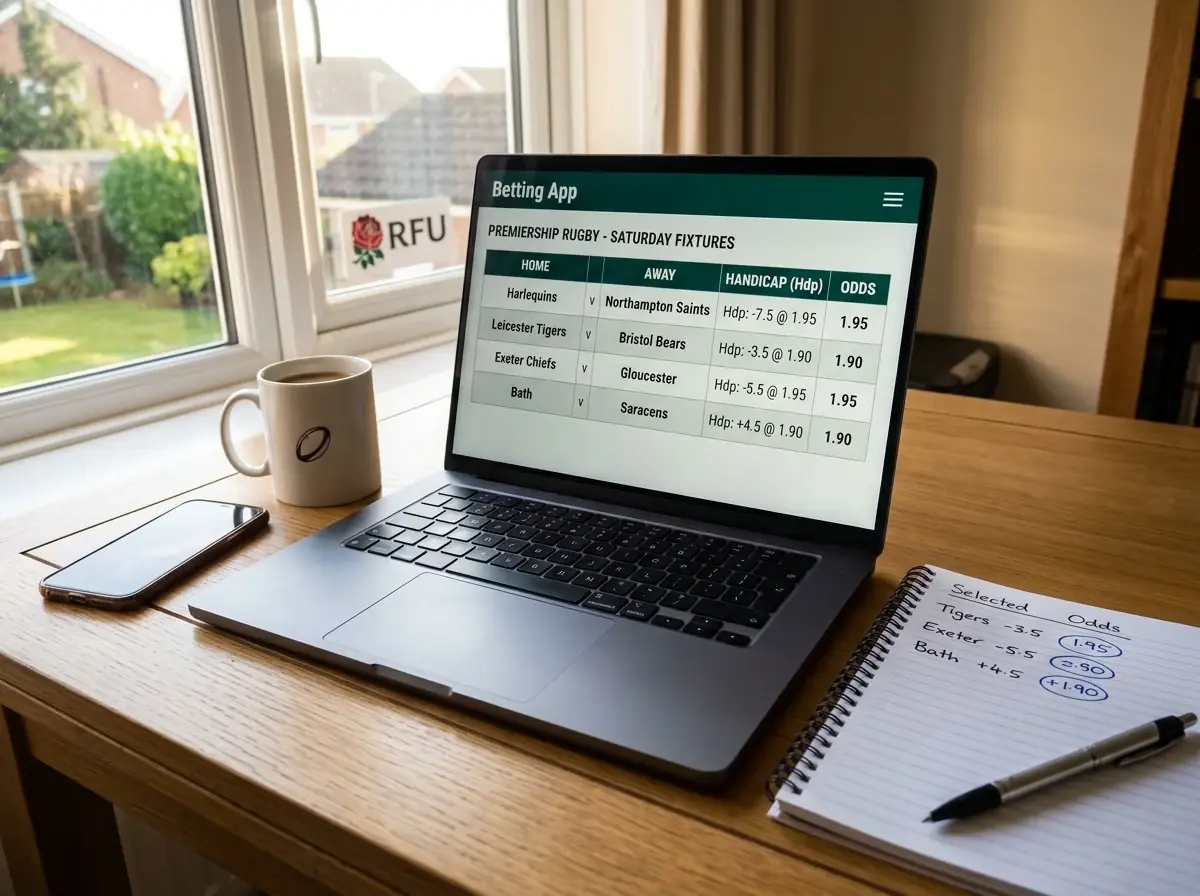
Best Rugby Betting Sites in the UK: What to Compare Beyond the Welcome Offer
 Available in US

Promo Banners Tell You Nothing About a Bookmaker’s Rugby Coverage
Every year I receive messages from readers who chose their bookmaker based on a sign-up bonus and then discovered the site offers twelve rugby markets per match while a competitor offers sixty. That is the equivalent of buying a car because the dealership had a nice waiting room. The welcome offer gets you through the door; the product behind it determines whether you stay.

Choosing a rugby betting site in the UK should be a functional decision, not a promotional one. You want a platform where the rugby markets are deep, the odds are competitive, live coverage is available, and the operator holds a valid licence. Everything else — bonuses, loyalty schemes, branded ambassador deals — is decoration. In 2025-2026, the Gambling Commission issued 741 cease-and-desist orders to advertisers and operators, which should tell you how aggressively some corners of the market pursue new customers without delivering a quality product behind the promotion.
I am not going to rank specific operators or tell you which site to use. That is not my role as an analyst, and frankly, the best site for you depends on which markets you bet in most frequently, whether you value live streaming, and how you prefer to manage your account. What I can do is give you the criteria that matter so you can evaluate any operator yourself.
Five Criteria That Actually Matter for Rugby Bettors
After nine years of placing rugby bets across multiple platforms, I have settled on five criteria that separate a useful rugby betting site from one that merely exists.
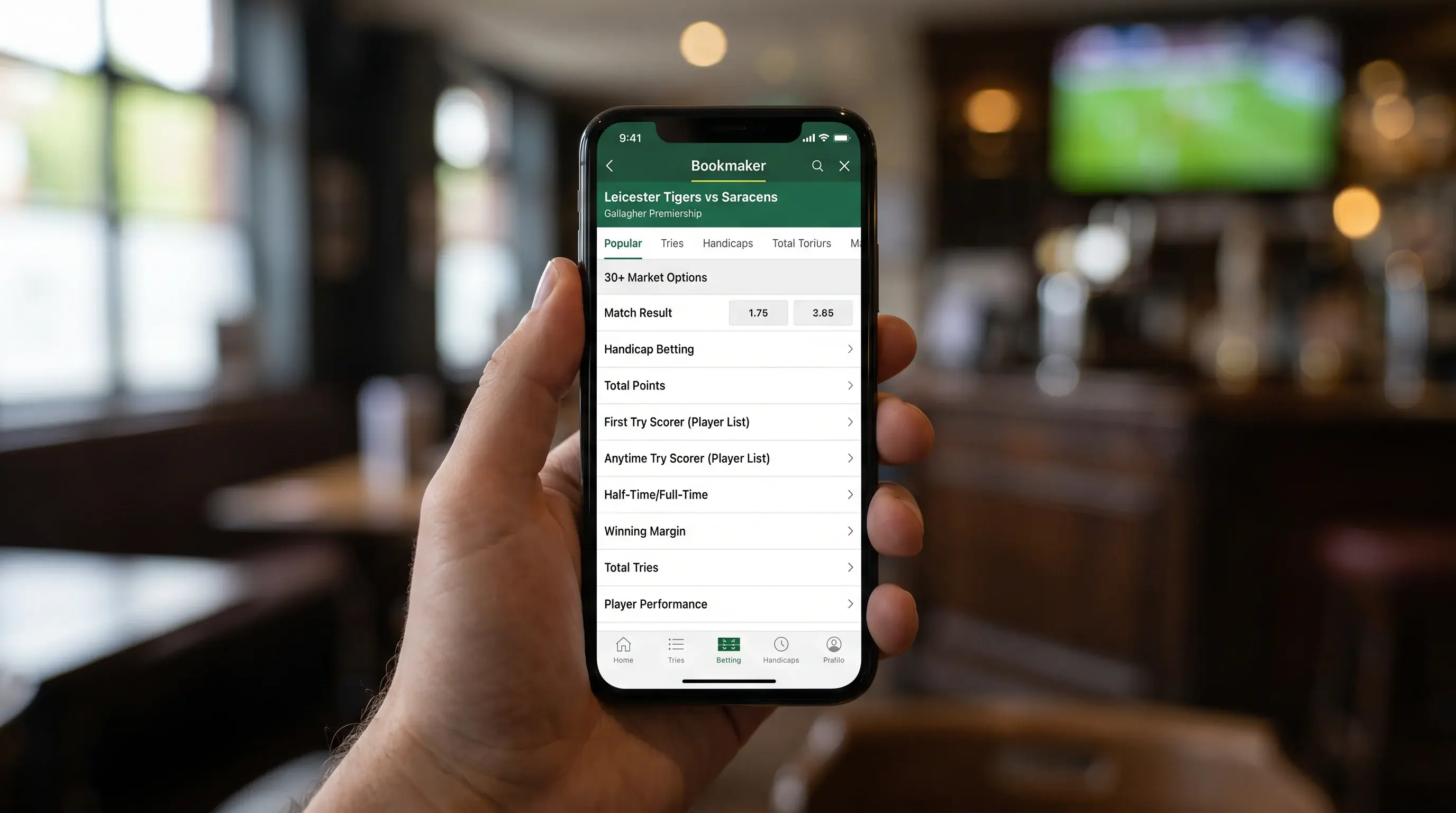
First: market depth. A good rugby bookmaker offers more than match winner, handicap and over/under for each fixture. You want tryscorer markets (first, last, anytime), winning margin, half-time/full-time, cards and penalty markets, bet builder functionality, and outright season markets. For Super League and NRL, you want League-specific props like tackles over/under and metres gained. If a site offers six markets on a Premiership match while a competitor offers forty, the competitor will almost certainly give you better prices on niche selections because the competitive pressure across a wider market range forces tighter margins.
Second: odds consistency. Some operators offer sharp odds on high-profile internationals but inflate their margins on domestic club rugby. Others are competitive across the board. The way to test this is simple: before a major round of Premiership fixtures, compare the match-winner odds for each game across three or four sites. Do this for three consecutive weekends. The site that consistently sits within 2-3% of the best available price is the one worth prioritising.
Third: live betting and streaming. If you bet in-play on rugby — and if you do not, you are missing some of the best value in the sport — you need a platform with responsive live markets and, ideally, a live stream. Watching a match through a bookmaker’s stream while the in-play markets update in real time is a fundamentally different experience from refreshing a scorecard. Not all sites stream rugby; those that do tend to cover internationals and major club competitions but may not carry lower-tier domestic matches.
Fourth: cash-out flexibility. Full cash out, partial cash out and auto cash out are features that give you control over open bets. Not all operators offer all three, and the cash-out margins vary — some are aggressive in their cash-out pricing, offering you significantly less than the fair value of your position. Test this by comparing the cash-out offer to the live odds available for the opposing outcome. A site with consistently fair cash-out pricing is more valuable than one with a flashy interface.
Fifth: account management. This covers deposit and withdrawal speed, responsible-gambling tools, customer support responsiveness, and the operator’s policy on restricting winning accounts. That last point is contentious — some operators limit or close accounts that show sustained profitability. If you take a data-driven approach and consistently find value, you may encounter this. Operators with a track record of accommodating informed bettors are worth their weight.
UKGC Licensing: The Non-Negotiable Baseline
Before you evaluate any of those five criteria, verify one thing: does the operator hold a licence from the UK Gambling Commission? This is not a nice-to-have. It is the legal and practical requirement for any company offering gambling services to UK residents, and it is the single factor that determines whether your funds are protected and the games are fair.

The Betting and Gaming Council represents approximately 90% of the UK betting and gaming industry outside lotteries, and every BGC member operates under UKGC licence conditions. Those conditions include mandatory responsible-gambling tools, ringfenced customer funds, advertising standards compliance, and submission to regulatory audits. An unlicensed operator is not bound by any of these requirements.
The scale of unlicensed gambling in the UK is significant. Around 1.5 million people in Britain bet on unlicensed sites, placing roughly ten billion pounds per year outside the regulated framework. Those bettors have no recourse if an operator fails to pay out, no access to the formal complaints process, and no protection under UK consumer law. For the sake of a marginally better odds line or a looser bonus structure, they accept a fundamentally unprotected position. I have zero tolerance for that trade-off, and I would encourage the same from anyone reading this.
Verifying a licence takes seconds. Every UKGC-licensed operator must display its licence number in the footer of its website. You can cross-reference that number on the Gambling Commission’s public register. If it is not there, walk away.
Market Depth and Live-Streaming Availability
Market depth is not a static feature — it varies by competition, by match profile and by time of year. A site that offers comprehensive markets for the Six Nations may pare back its offerings for the early rounds of the Challenge Cup or for mid-tier European fixtures. The test is not one fixture; it is a season-long assessment of how consistently the operator delivers depth across the competitions you care about.

I evaluate market depth across three tiers. Tier one: internationals and major tournaments (Six Nations, World Cup, autumn tests). Every serious rugby bookmaker should offer 40+ markets per match here, including bet builder options. Tier two: domestic leagues (Premiership, Super League, Top 14, URC). A good operator offers 25-40 markets per match. Tier three: lower-profile competitions (Championship, Challenge Cup early rounds, NRL). 15-25 markets per match is adequate; fewer than that suggests the operator treats rugby as a secondary sport.
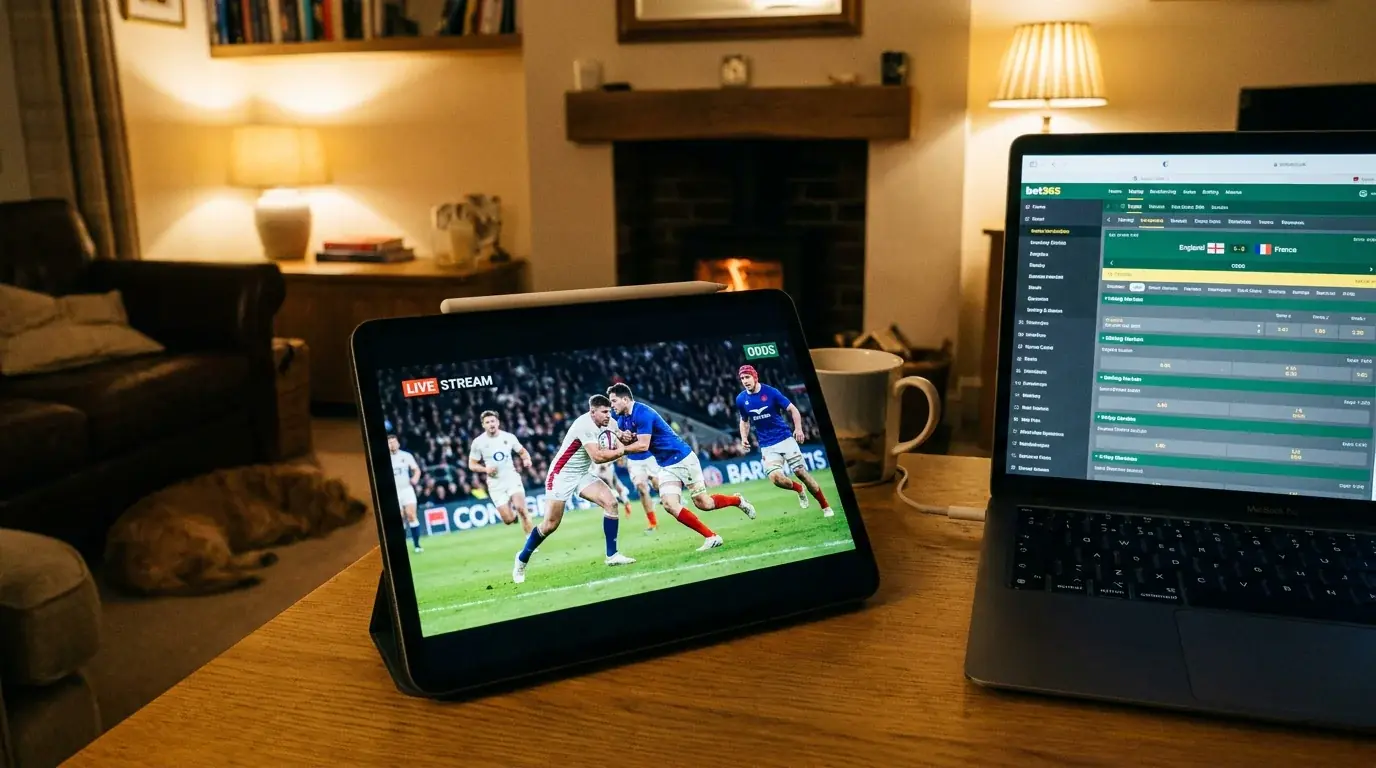
Live streaming is increasingly a differentiator. In the UK, ITV holds a significant share of Six Nations broadcast rights for the 2026-2029 cycle, and BBC covers home matches for Scotland and Wales. But for domestic club rugby, Champions Cup fixtures, and international competitions outside the free-to-air window, a bookmaker’s live stream may be the most accessible viewing option. If you bet in-play, watching the match while the market moves is not a luxury — it is a tool. An operator that pairs deep in-play markets with live streaming earns its place in your rotation simply because the combination of watching and betting creates information advantages you cannot replicate from a text commentary feed.
For those focused on evaluating operators from a regulatory perspective, responsible rugby betting covers the practical tools that every licensed site must provide under UKGC conditions.
How do I verify a rugby betting site’s UKGC licence?
Every UKGC-licensed operator must display its licence number, usually in the website footer. Copy that number and search it on the Gambling Commission’s public register at the Commission’s official website. The register confirms whether the licence is active, who holds it and what activities it covers. If the number does not appear on the register, the operator is not licensed to serve UK customers.
Do all UK bookmakers offer the same rugby markets?
No. Market depth varies significantly between operators. Some offer 40 or more markets per fixture for major internationals, while others may list fewer than 15 for the same match. Domestic and lower-tier competitions see even wider variation. The best approach is to compare market availability across three to four sites for the specific competitions you bet on most frequently.
Written by the editors at Rugby Betting Tips.