Cash-Out Strategy for Rugby Betting: When to Lock In Profit and When to Let It Ride
 Available in US
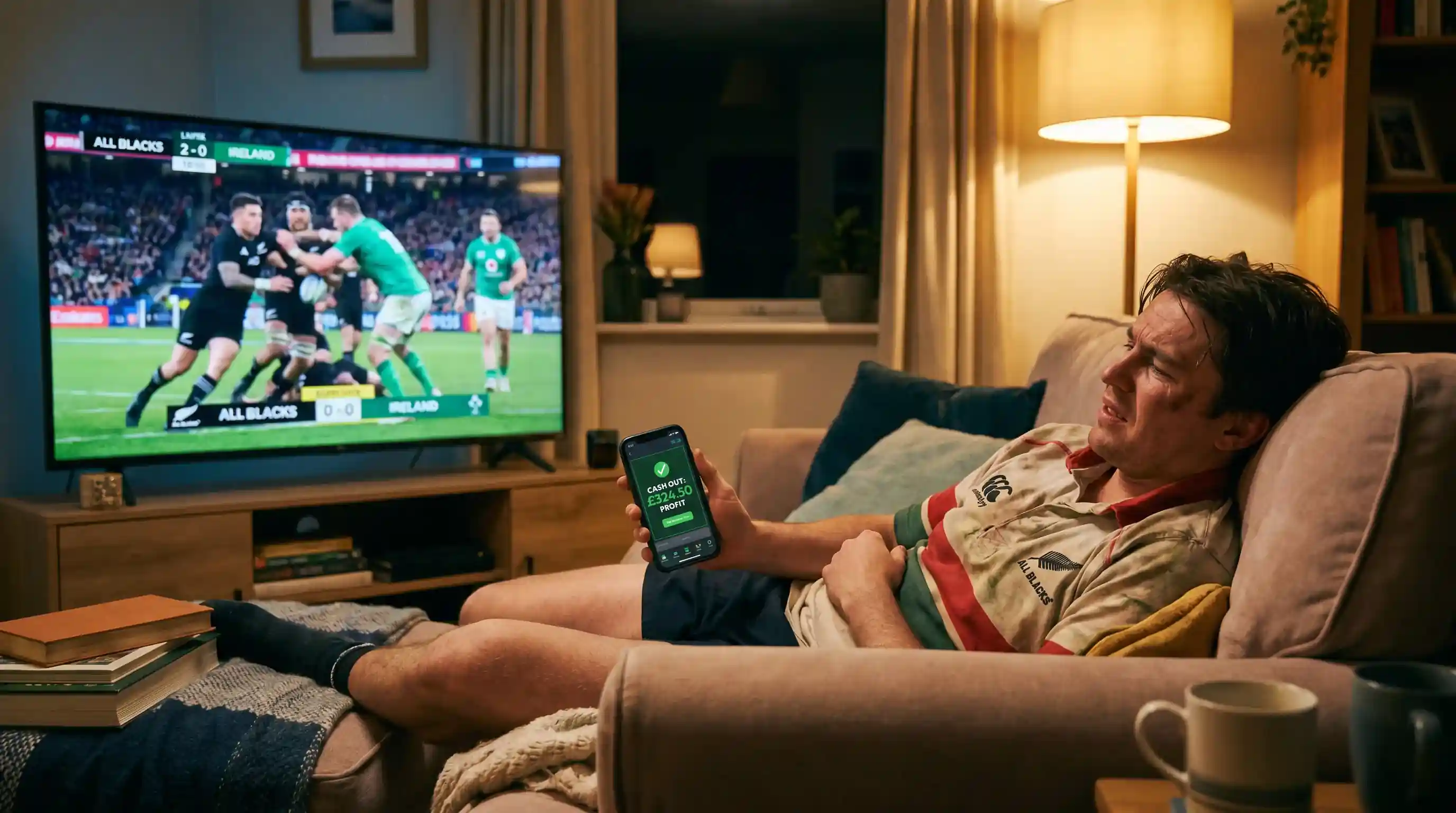
Bookmakers Did Not Invent Cash Out to Help You Win
The first cash-out offer I accepted felt like a smart move. I had backed a Premiership side on the handicap at 1.90, they were covering the line at 65 minutes, and the bookmaker offered me 78% of the full payout to close the bet early. I took it. They covered the handicap at full-time. I had locked in a profit, but I had also surrendered 22% of my expected return because I confused certainty with value.
Cash out is a tool, and like any tool, its value depends on how you use it. Bookmakers promote cash out aggressively because it is profitable for them — the cash-out price includes a margin that skims value from the bettor. Sports betting accounts for 57.1% of UK online gambling revenue, and cash out has become one of the highest-margin features within the betting product. Understanding how the margin works and when it is worth paying is essential for any bettor who wants to use cash out rationally rather than reactively.
How Cash-Out Pricing Works Under the Surface
A cash-out offer is the bookmaker’s estimate of your bet’s current value, minus a margin. If your bet has an expected value of ten pounds at the point of cash out, the bookmaker might offer you eight or eight-fifty. The 15-20% gap is the cash-out margin — the price you pay for the convenience of closing the bet early.
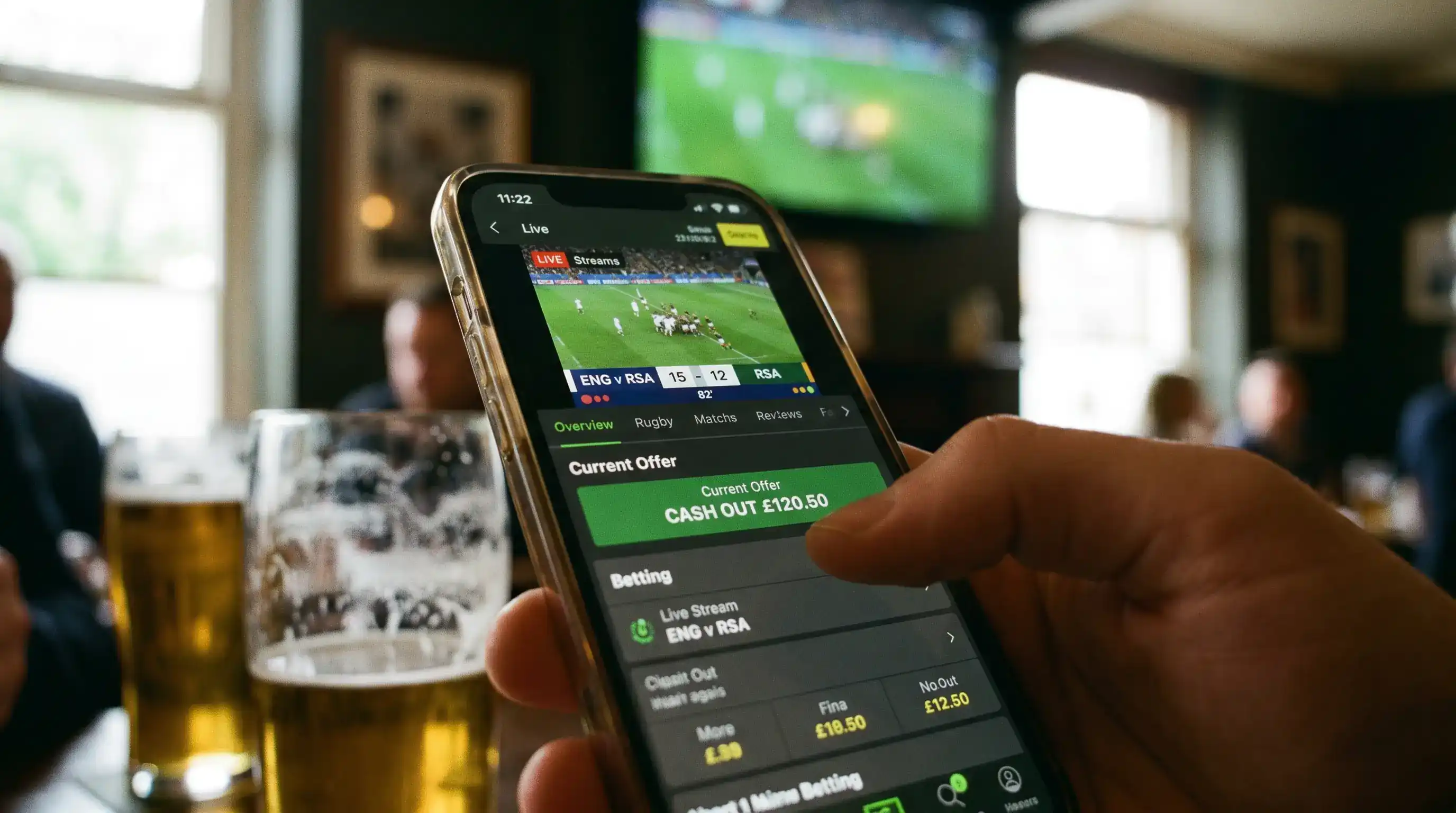
The bookmaker calculates the current value by repricing your original selection in the live market. If you backed a side at 1.90 pre-match and they are now 1.30 to cover the same line, your bet has increased in value because the probability of it landing has improved. The cash-out offer reflects that improved probability minus the margin. The inverse also applies: if the probability has worsened, the cash-out offer drops below your original stake.
The margin on cash out is not fixed. It varies by operator, by sport, by market and by the stage of the match. In my experience, the margin is widest in the final ten minutes of a rugby match, when the outcome is most uncertain and the bookmaker’s risk is highest. It is narrowest in the middle of the match, when the live pricing is most stable. This means that cashing out late — which is when most bettors feel the urge to do so — is the least favourable time from a margin perspective.
I calculate the implicit margin on every cash-out offer before deciding whether to accept. The calculation is simple: compare the cash-out offer to the expected value if the bet runs to completion. Expected value equals the probability of winning (my estimate, not the bookmaker’s) multiplied by the full payout. If the cash-out offer exceeds the expected value, accept. If it does not, decline. That single calculation has saved me hundreds of pounds over the seasons by preventing emotional cash-outs that felt prudent but were mathematically wrong.
Scenarios Where Cashing Out Makes Sense
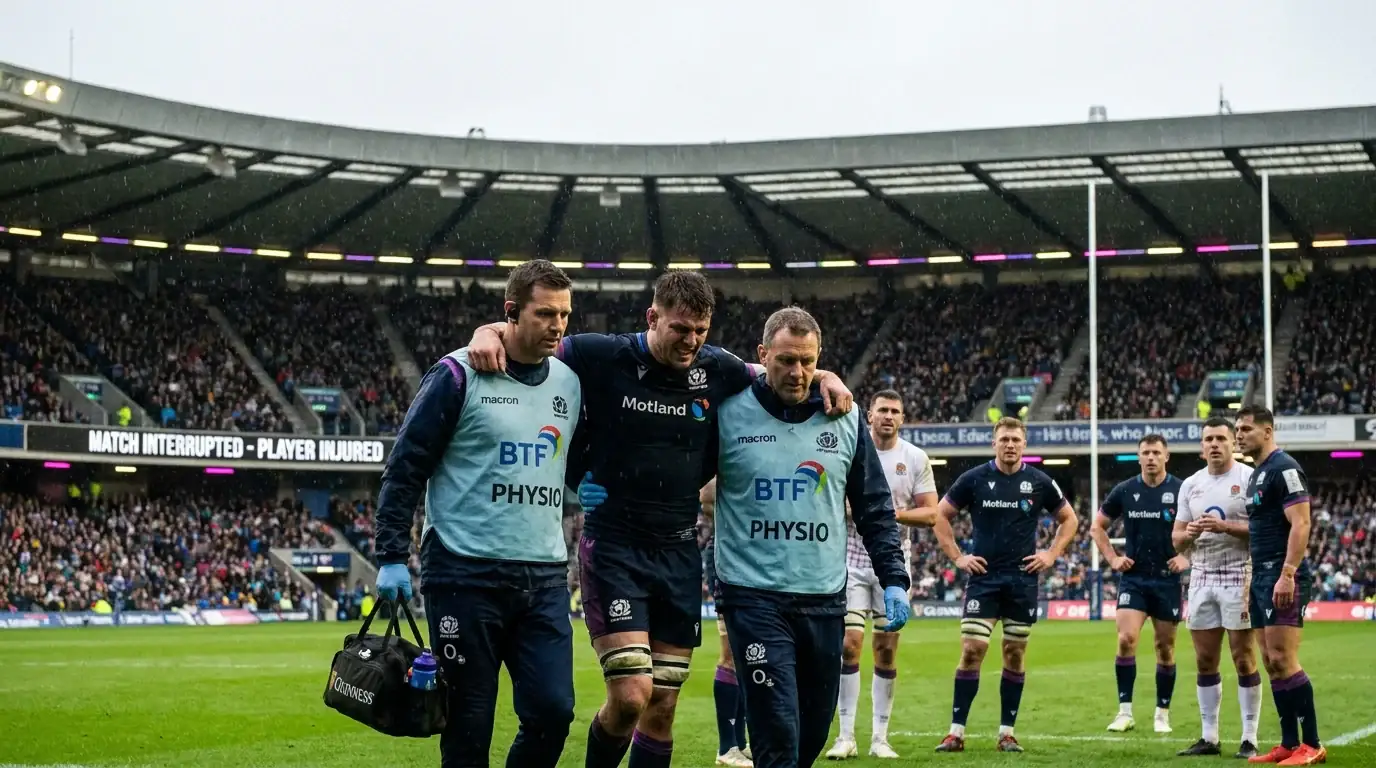
Despite the margin, there are specific situations where cashing out is the rational choice. The first is when new information has changed your probability estimate. If you backed a side on the handicap and their first-choice fly-half leaves the field injured at half-time, your pre-match analysis is invalidated. The probability of your bet landing has dropped, and the cash-out offer may reflect the new reality more accurately than your now-outdated assessment. Cashing out in this scenario is not emotional — it is a response to a genuine change in the match conditions.
The second scenario is when the cash-out offer exceeds your revised expected value. This happens when the bookmaker’s live model is slower to adjust than your own. If a try is scored that dramatically shifts the match but the live odds have not yet fully updated, the cash-out offer may briefly represent genuine value. I have exploited this window a handful of times, though it requires watching the match live and reacting within seconds.
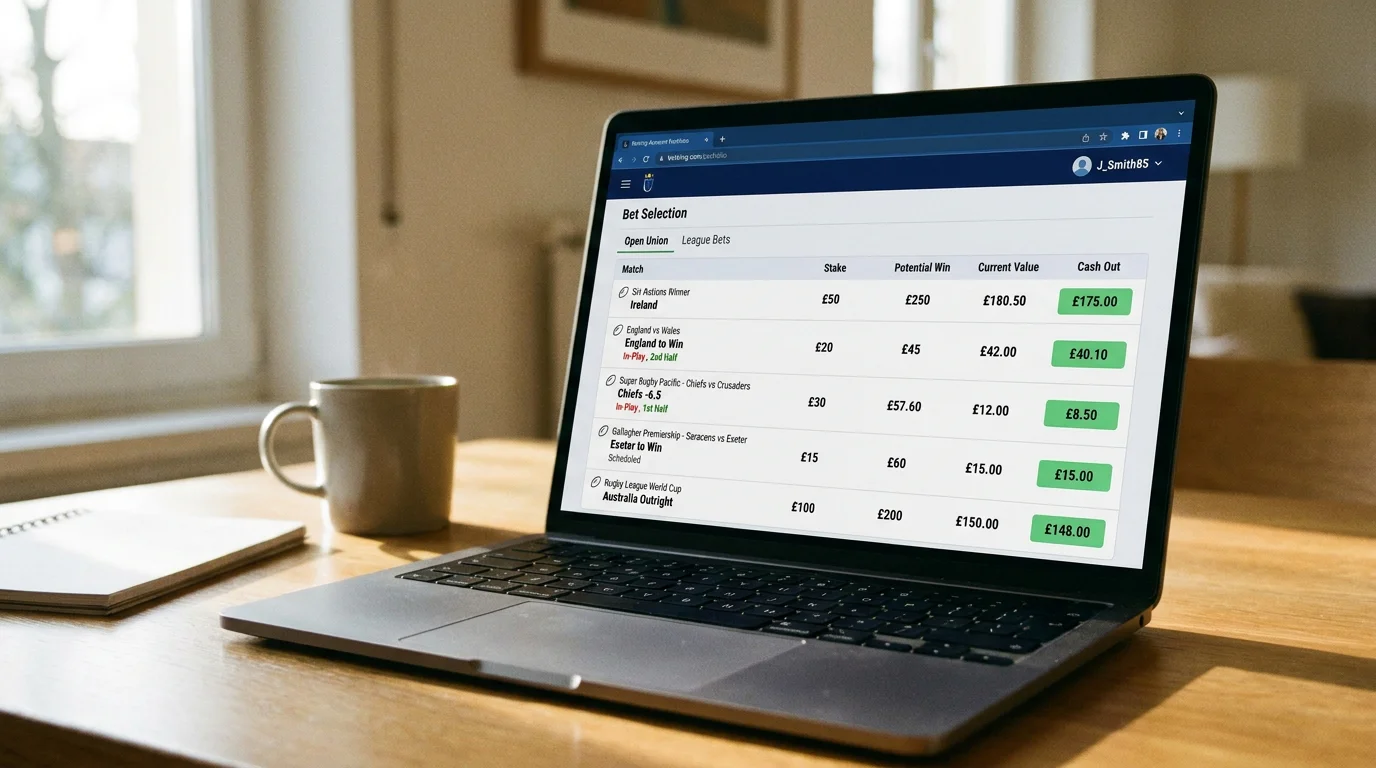
The third scenario is portfolio management. If you have multiple bets running simultaneously and one has moved strongly in your favour, cashing out locks in profit that reduces the variance of your overall portfolio. This is not about the individual bet — it is about the aggregate position. A bettor with three open bets can reduce their exposure by cashing out the most profitable one, ensuring a positive return for the session regardless of how the other two resolve. The Six Nations 2025 averaged 55 points per match, and multi-bet sessions during tournament weekends are exactly the context where portfolio-level cash-out decisions make sense.
Partial Cash Out and Auto Cash Out as Tactical Tools
Partial cash out allows you to close a portion of your bet while leaving the remainder active. If the bookmaker offers a full cash-out of forty pounds on a bet with a potential payout of sixty, you could partially cash out fifty percent — receiving twenty pounds immediately while leaving a bet worth thirty pounds still running. This is useful when your probability estimate has shifted but not enough to justify closing the entire position.
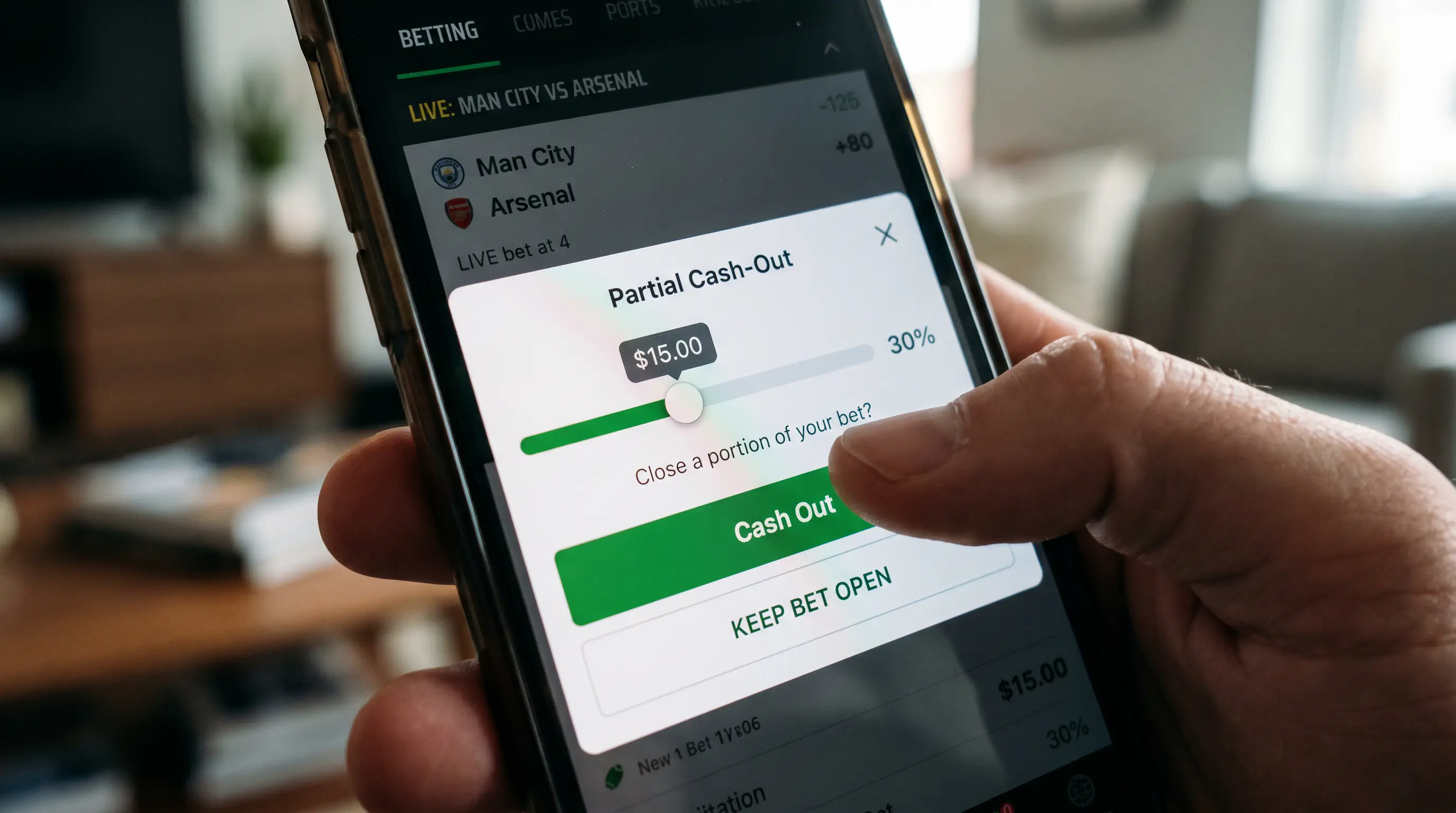
I use partial cash out in a specific way: when a bet has moved significantly in my favour and the remaining uncertainty is genuinely binary. A rugby example: I have backed the over on total points, and the combined score at 60 minutes is already close to the line. The over is likely to land, but a scoreless final twenty minutes — rare but not impossible — would mean the bet loses. Partial cash out lets me lock in profit on the portion of the bet that reflects the high probability of success while keeping exposure to the potential full payout.
Auto cash out sets a threshold at which the bookmaker automatically cashes out your bet without requiring manual intervention. You specify a profit target or a loss limit, and the system executes when either is reached. I use auto cash out rarely, because the thresholds are necessarily set in advance without knowledge of how the match will develop. A pre-set profit target might be reached at a moment when the bet’s expected value exceeds the cash-out offer, and the auto function closes the position at the wrong time. If you use auto cash out, set the threshold conservatively — well above the level at which you would manually intervene — to avoid premature exits.
The Emotional Pull of Cash Out and How to Resist It
Cash out exploits a well-documented psychological bias: loss aversion. People feel the pain of a loss roughly twice as intensely as the pleasure of an equivalent gain. When a bet is in profit and the cash-out button glows on your screen, the fear of losing that unrealised profit overwhelms the rational assessment of whether cashing out is the correct decision. Bookmakers design the cash-out interface to amplify this bias — the offer is prominent, updating in real time, creating a sense of urgency that pushes you toward accepting.
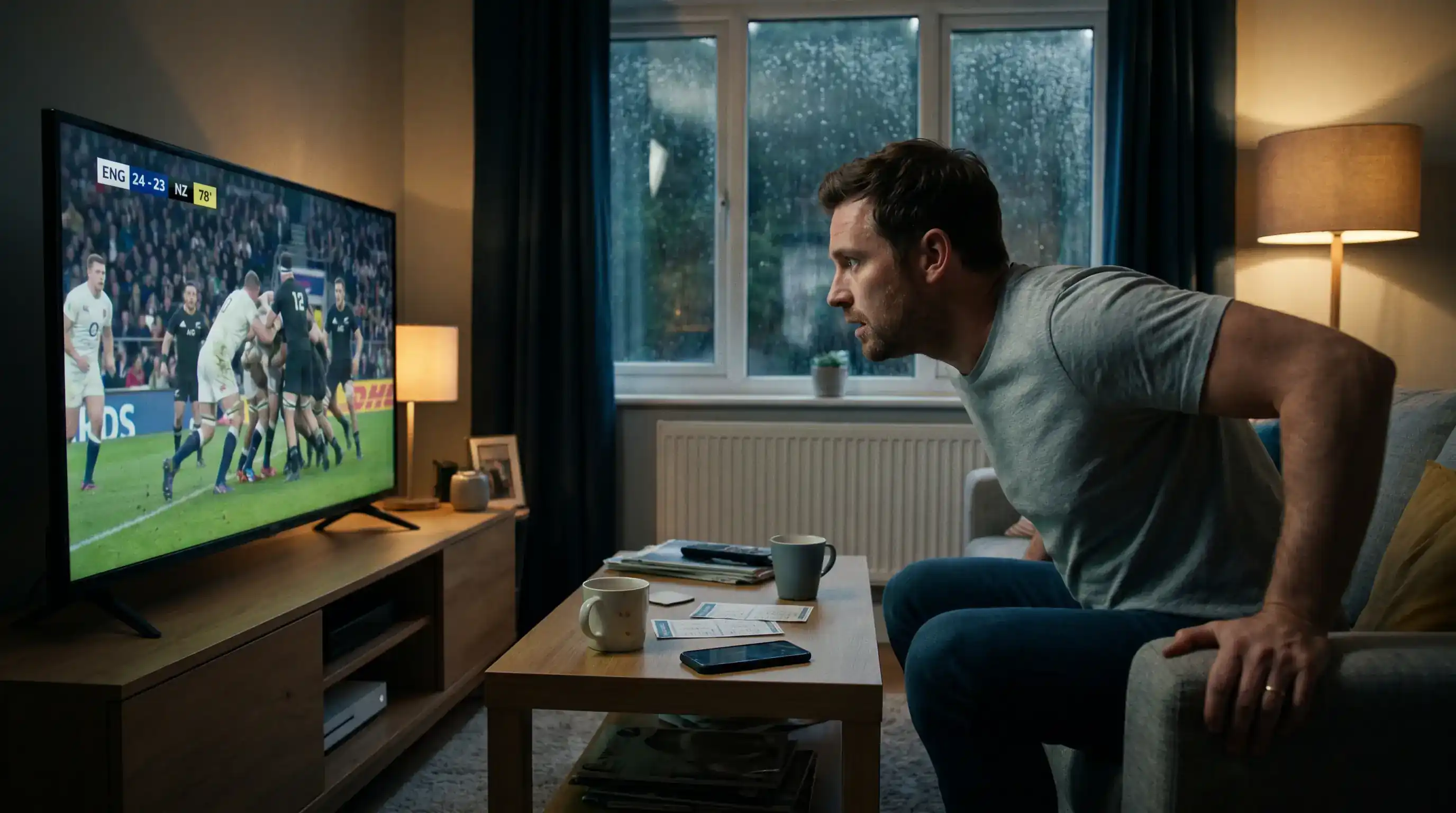
I resist the pull by applying a rule: I do not look at the cash-out offer unless I have a specific, pre-identified reason to consider cashing out. If I placed the bet based on sound analysis and nothing has changed — no injury, no red card, no weather shift — the correct action is to let the bet run to its conclusion. The pre-match analysis that justified the bet has not been invalidated, so there is no reason to close the position at a discount.
UK bookmakers handle around 290 million online sports bets per month, and a significant portion of their margin comes from bettors who cash out profitable positions early, surrendering expected value in exchange for the comfort of certainty. That comfort has a price, and over a full season of rugby betting, the accumulated cost of unnecessary cash-outs can represent a substantial drag on your returns. For a complementary perspective on how in-play dynamics create both cash-out opportunities and cash-out traps, half-time full-time rugby betting explores the match-shape analysis that informs live decision-making.
Is cashing out a rugby bet ever the right decision?
Yes, in specific circumstances. Cash out is rational when new information — an injury, a red card, a significant tactical change — has reduced the probability of your bet landing below the level at which the cash-out offer represents fair value. It is also rational for portfolio management when you want to reduce overall exposure across multiple open bets. The key is comparing the cash-out offer to your revised expected value rather than accepting reflexively.
How much margin do bookmakers charge on cash-out offers?
The cash-out margin varies by operator and match situation but typically ranges from 10-20% below the bet’s theoretical fair value. The margin tends to be widest in the final minutes of a match, when uncertainty is highest. Some operators offer more competitive cash-out pricing than others, so if you use cash out frequently, comparing the typical margin across your accounts is worthwhile.
Created by the ”Rugby Betting Tips” editorial team.