Rugby Union vs Rugby League Betting: Two Codes, Two Completely Different Markets
 Available in US
Treating League Like Union With Fewer Players Is the Fastest Way to Lose Money
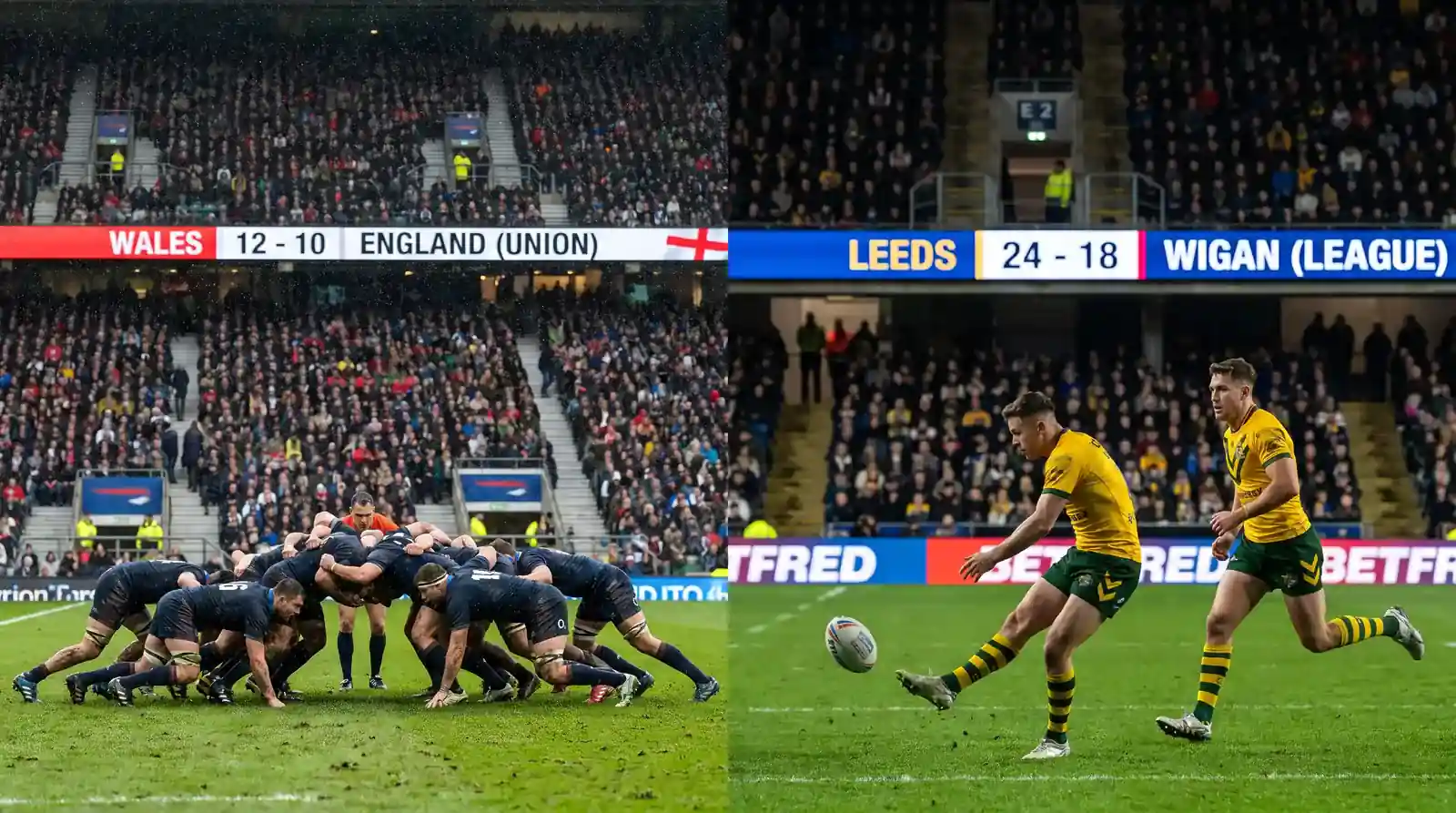
The first time I crossed from Union to League betting, I carried every assumption I had built over years of analysing the 15-a-side game. I expected similar scoring dynamics, similar handicap ranges, similar market structures. I was wrong about all three. My first month of Super League betting showed a negative ROI of 14% — the worst stretch of my career. The lesson was expensive but permanent: Union and League are different sports that share a name and a ball, and the betting markets for each demand separate analytical frameworks.
The global sports betting market stands at $125.12 billion in 2026, and within that figure, rugby Union and League occupy distinct market segments with different bettor profiles, different bookmaker expertise and different pricing efficiencies. Understanding those differences is essential if you bet on both codes, and understanding one code deeply is essential even if you only bet on that code — because the bookmaker’s pricing is built on code-specific models that you need to understand in order to find value.
Scoring Systems and What They Mean for Totals
Union awards five points per try, two per conversion, three per penalty and three per drop goal. League awards four per try, two per conversion, one per drop goal and two per penalty goal. These differences sound minor on paper but compound into significant divergence in scoring patterns and totals lines.

Union’s higher try value means that each try contributes more to the total, which increases the variance within individual matches. A side that scores four tries in Union adds 20 points to the total from tries alone, plus up to 8 from conversions. The same four tries in League add only 16, plus up to 8 from conversions. That per-try gap means Union totals lines are structurally higher than League lines for equivalent try counts, and bettors who fail to adjust for the scoring system will misjudge the expected total.
League compensates with higher try frequency. The six-tackle rule creates structured possession that produces more scoring opportunities per minute than Union’s contested breakdown. A typical Super League match produces eight to twelve tries, compared to four to seven in a Premiership Union match. The result is that combined totals in League are comparable to Union despite the lower per-try value — both codes produce totals lines in the 38-50 range for competitive fixtures — but the composition of those totals is different. League scores are more try-dependent; Union scores include a larger contribution from kicks at goal.
For totals bettors, this compositional difference matters because it affects variance. A Union match where both kickers are off-form can produce a total 10+ points below the expected line because the kicking contribution collapses. A League match is less sensitive to kicking form because a smaller proportion of the total comes from place kicks. If you are building an over/under model, the inputs and their weightings need to be code-specific.
Handicap Markets Across the Two Codes
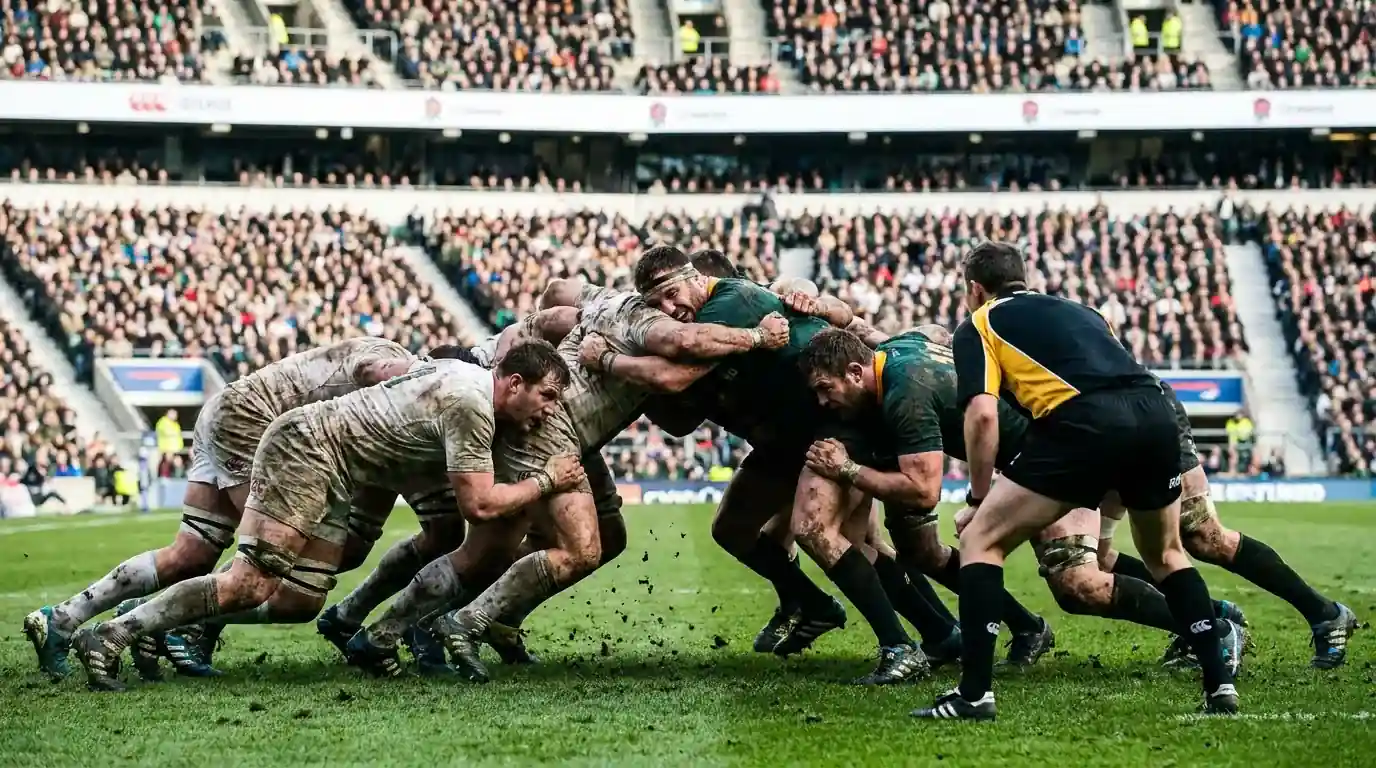
Handicap pricing in Union reflects the significance of set-piece dominance, forward power and territorial kicking — factors that can produce sustained periods of scoreless pressure where one side controls territory without crossing the try line. A side can dominate 60% of a Union match and win by only 5 points if their dominance manifests as repeated lineout drives that fall short and penalties kicked from halfway.

In League, dominance translates into points more directly. The lack of contested breakdowns and the structured possession system mean that a dominant side converts field position into scoring opportunities with greater efficiency. A League side dominating 60% of a match will typically outscore a Union side with the same percentage of dominance because the conversion rate from territory to points is higher in League. This means League handicap margins tend to cluster closer to the true quality gap between sides, while Union handicap margins can deviate more widely because the conversion rate from dominance to points is less predictable.
I adjust my handicap model for each code accordingly. In Union, I weight set-piece metrics heavily: scrum win percentage, lineout steal rate and maul success rate all feed directly into expected margin. In League, the relevant metrics are completion rate (the percentage of six-tackle sets completed without losing possession), metres gained per set and missed tackles. Sportradar monitors over 1,000,000 sporting events globally and provides data streams for both codes, but the metrics that matter for handicap prediction are fundamentally different.
Market Efficiency: Where Each Code Offers More Value
Neither code is universally more efficient than the other, but each has pockets of inefficiency that reward code-specific expertise.

In Union, the most inefficient markets are domestic club handicaps outside the television schedule and lower-tier international fixtures (Pacific Nations Cup, Rugby Europe Championship). These receive minimal public attention, and the bookmaker’s pricing is often based on broad assumptions rather than detailed match-specific analysis. I find consistent value in Premiership handicaps for Friday-night and Sunday-afternoon fixtures, where the market is thinner than for Saturday’s main-event matches.
In League, the most inefficient markets are Challenge Cup fixtures from the quarter-finals onward, where squad rotation and cup motivation create uncertainty that the market does not fully price. Mid-week Super League fixtures also offer value because fatigue and rotation are more impactful in League’s high-intensity, high-collision format than in Union.
Cross-code events — such as the occasional exhibition matches between Union and League sides or players crossing between codes — create unique mispricing because bookmakers have almost no historical data to model these fixtures. I approach cross-code events as entertainment bets rather than value bets, because the uncertainty is too great for any model to produce reliable probabilities. For a deeper look at Super League-specific betting strategies, Super League betting tips covers the code in detail.
Choosing Your Code or Betting Both
The question I am asked most often about code selection is whether to specialise or diversify. My answer depends on your available time. Each code requires a dedicated database, a code-specific model and ongoing data collection. If you have time for both, the combined calendar gives you near year-round rugby betting: Union from September to June, League from February to October, with significant overlap in the spring and autumn months.

If you have time for one, choose the code you know better. Knowledge of the teams, players, coaches and competition rhythms is more valuable than analytical sophistication, because it allows you to spot information the model misses — tactical changes, morale shifts, squad dynamics — that move the needle on match day. The Six Nations 2025 averaged 55 points per match across Union’s flagship tournament, and the excitement of that competition draws many bettors to Union. But Super League offers more fixtures per week and, in my experience, wider pricing margins on domestic markets. Neither code is objectively better for betting — the better code is the one where your expertise runs deepest.
Is rugby league or rugby union better for betting?
Neither code is inherently better. Rugby Union offers deeper market coverage for international fixtures, while Rugby League provides more frequent domestic matches with potentially wider pricing margins. The best code for you is the one where your knowledge and analytical framework are strongest. Many successful rugby bettors focus on one code rather than splitting their attention across both.
Do the same betting strategies work for both rugby codes?
The overarching principles — finding value, comparing your probability estimates to the bookmaker’s implied probabilities, managing bankroll — apply to both codes. However, the specific analytical inputs differ significantly. Union analysis relies heavily on set-piece metrics and kicking accuracy. League analysis focuses on completion rates, metres gained and tackle efficiency. Transferring a Union model to League without recalibrating the inputs will produce unreliable predictions.
Written by the editors at Rugby Betting Tips.