Six Nations Betting Tips: Match-by-Match Strategy Backed by Stats
 Available in US

Table of Contents
- What Makes Six Nations the Premier Betting Event in Rugby
- Audience Numbers and Why They Matter for Odds
- How Betting Strategy Shifts Round by Round
- The Markets That Offer the Most Value in Six Nations
- Assessing Form: Points Scored, Conceded and Margins
- Grand Slam and Outright Winner Bets: When to Strike
- Frequently Asked Questions
What Makes Six Nations the Premier Betting Event in Rugby
I have watched punters chase value across every rugby competition on the calendar for nine years, and nothing comes close to the Six Nations for sheer betting intensity. Not the World Cup, not the Premiership final, not even a Lions Test. The championship delivers five consecutive weekends of international rugby between six teams that know each other inside out, and the betting markets reflect that familiarity with a depth you simply do not get elsewhere.
The numbers tell the story better than I can. The 2026 Six Nations finale between France and England — that absurd 48-46 thriller — pulled 8.02 million viewers on France 2 alone, peaking at 9.5 million. Millions more watched across ITV in the UK. That is the kind of audience that drives bookmaker investment in market variety, promotional spend and competitive odds. Where eyeballs go, money follows, and where money goes, markets deepen.
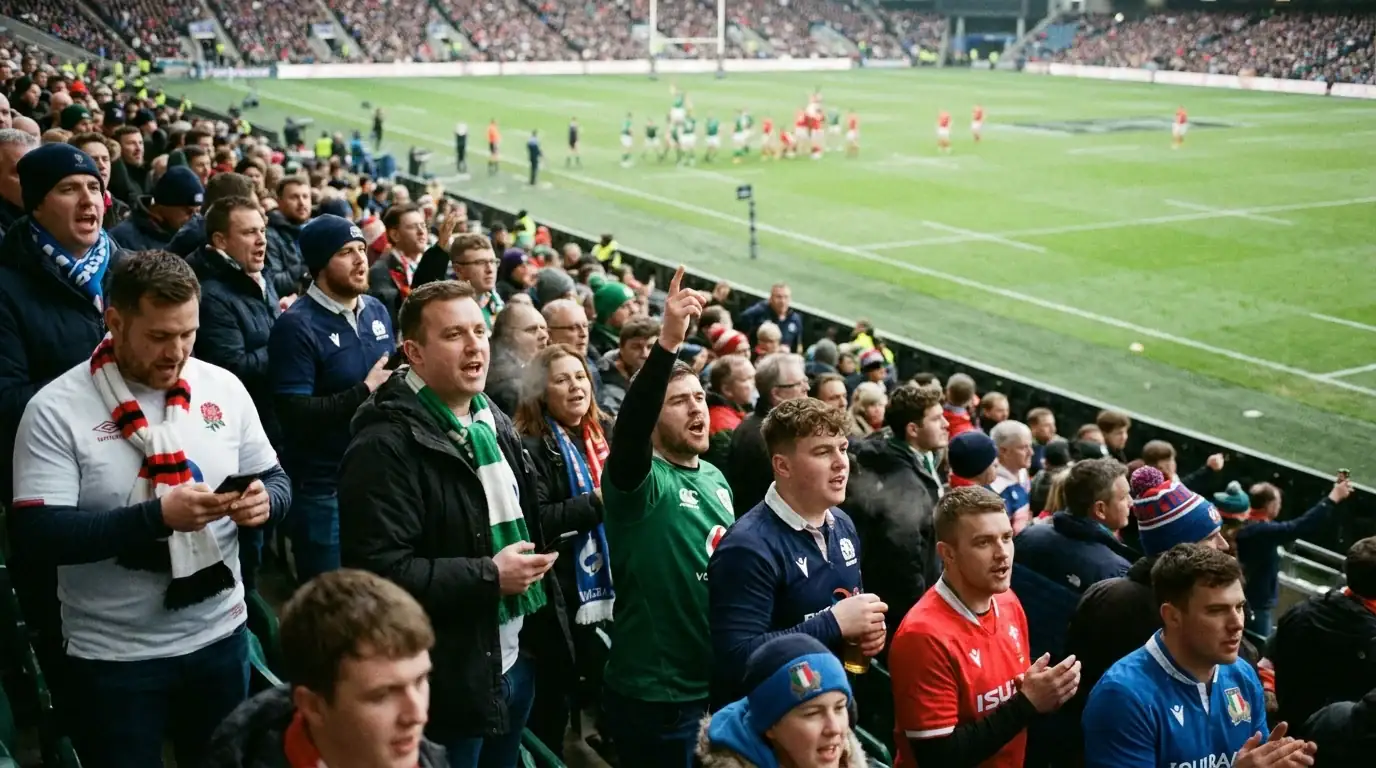
That commercial weight means the Six Nations is not a niche event that bookmakers cover as an afterthought — it is a flagship. Operators build dedicated landing pages, run enhanced-odds specials and open markets months before the first whistle. For bettors, that translates into more options, tighter margins on headline markets and enough liquidity to place meaningful stakes without moving the line.
What separates the Six Nations from other rugby betting opportunities, though, is the structure itself. Five rounds, fifteen matches, every team playing every other team once. There are no group-stage dead rubbers, no meaningless pool fixtures. Every single match carries championship implications from Round 1 onwards. That structure rewards preparation. If you track form, scoring patterns and tactical matchups methodically, the Six Nations hands you a clear, repeatable framework to work within — and that framework is what this entire guide is built around.
I am going to walk through how audience data connects to odds movement, how strategy should shift from round to round, which markets consistently offer the best value, and how to read team form in a way that actually predicts outcomes rather than just describing what happened last week.
Audience Numbers and Why They Matter for Odds
Most punters never think about television ratings when placing a rugby bet. I used to be one of them. Then I started noticing a pattern: the matches with the biggest audiences consistently had the tightest match-winner odds and the most aggressive promotional pricing. It was not a coincidence — it was the market responding to demand.
When Scotland played England in the 2026 Six Nations, the match hit a peak audience of 5.3 million on ITV1 and ITVX, making it the single largest sports rating on ITV for the entire year. A match drawing that kind of attention forces bookmakers into a competitive pricing war on the headline market. They know thousands of casual punters are watching, many of whom will be placing their first or only rugby bet of the season. To capture that traffic, operators slash their match-winner margin to levels you rarely see in club rugby. The result? Better odds for everyone, including those of us who actually know what we are looking at.
The broadcast landscape itself has shifted in ways that affect betting behaviour. For the 2026-2029 cycle, ITV secured a larger share of Six Nations rights, including all of England’s matches. BBC retained home fixtures for Scotland and Wales. This split matters because ITV’s commercial model means more gambling advertising around match coverage, which drives sign-ups and promotional offers. BBC’s ad-free coverage, by contrast, tends to attract a slightly different demographic — one that may be less saturated with betting messaging but still creates significant search traffic for odds and tips around match day.

Then there is the streaming dimension. The Six Nations was streamed nearly 15 million times on ITVX across its ten matches in 2026, a figure that grew from the previous year. Streaming audiences skew younger, more digitally fluent and — critically for our purposes — more likely to bet in-play via mobile. That shift in how people consume Six Nations rugby is gradually moving betting volume from pre-match markets into live markets, where the pricing is more volatile and the edges can be sharper.
What does all of this mean in practice? Three things. First, the highest-profile Six Nations matches — England away fixtures, the final round decider, any Grand Slam showdown — will have the most competitive pre-match odds. Second, evening kick-offs on ITV tend to generate larger audiences than Saturday afternoon slots on BBC, so the promotional intensity around those fixtures is usually higher. Third, the growth of streaming viewership is pushing more money into in-play markets, which means live odds are becoming more responsive but also more exploitable if you are watching the match and reading momentum shifts in real time.
I track broadcast schedules before every Six Nations round and cross-reference them with bookmaker promotional calendars. It takes five minutes and regularly surfaces enhanced-odds offers that only appear because the operator is chasing eyeballs on a specific fixture.
How Betting Strategy Shifts Round by Round
A mistake I made for years was treating all five rounds of the Six Nations the same way. Same research process, same market focus, same staking approach. It took me a long time to accept that Round 1 and Round 5 are fundamentally different betting propositions, and that the strategy needs to evolve as the championship unfolds.
Round 1 is defined by uncertainty. Teams have not played competitive rugby together for months. New coaching staff may have changed tactical systems. Key players might be returning from injury without match sharpness. The bookmakers know all of this, and they price it in by widening their margins. Match-winner odds in Round 1 tend to carry a higher overround than Rounds 3 or 4, because the oddsmakers themselves have less confidence in the true probabilities. For punters, this means Round 1 is often the worst time to bet on match outcomes and the best time to look at totals markets instead. Teams are still calibrating, defensive systems take longer to gel than attacking ones, and the result is frequently higher-scoring, more chaotic rugby. The 2025 tournament averaged 55 points per match across the whole championship, but the early rounds consistently ran above that number.
Rounds 2 and 3 are where the picture sharpens. By now, you have actual performance data from the tournament itself — not just warm-up fixtures or autumn form from three months ago. I focus heavily on handicap markets during the middle rounds because the bookmaker’s line tends to lag behind what the first two matches revealed. If a team looked tactically disorganised in Round 1 but the bookmaker is still pricing them as competitive in Round 2, that disconnect is where value lives. Similarly, a team that dominated their opener might be over-corrected by the market in Round 2, with the handicap set too generously.
Round 4 is the pivot. By this stage, at least one team has usually been eliminated from championship contention, and their motivation shifts from winning the title to avoiding the wooden spoon or securing a respectable points difference. Motivation changes everything in international rugby because, unlike club sides, these players do not have a contract binding them to next week’s performance. Watch for teams with nothing to play for being given artificially generous handicaps. The public backs the “live” teams, and the bookmakers are happy to let them, which can push value onto the other side of the line.
Round 5, the so-called Super Saturday, operates under its own laws. Multiple matches kick off with championship positions still undecided, and try bonuses, points difference and head-to-head records can all come into play. This is the round where accumulator bets become genuinely interesting because the correlation between matches — teams in different fixtures all needing to score heavily — creates unusual interdependencies that bookmakers struggle to price accurately. I have had some of my best Six Nations returns from Round 5 accumulators built around bonus-point scenarios.
The practical framework I use is straightforward. Rounds 1-2: focus on totals and try-scorer markets, avoid match-winner bets unless the odds genuinely surprise you. Rounds 3-4: shift to handicap markets and look for motivational mismatches. Round 5: build small accumulators around correlated bonus-point and margin outcomes. This is not a rigid system, but it gives each round a distinct identity in your betting approach rather than treating the championship as one long, undifferentiated event.

The Markets That Offer the Most Value in Six Nations
Every Six Nations, I see the same thing: casual punters pile into match-winner bets, the bookmakers take their margin, and the sharper markets sit there with less attention and — frequently — softer odds. Understanding which markets the bookmakers price most carefully and which ones they price reactively is half the battle.
Match-winner is the most liquid market, and liquidity is a double-edged sword. Yes, the odds are competitive on marquee fixtures because operators fight for traffic. But the pricing is also the most efficient, meaning the bookmaker’s implied probabilities are closest to reality. My hit rate on Six Nations match-winner bets over the last five years sits around 58%, which sounds decent until you factor in the average odds — hovering near 1.70 to 1.85 on favourites — and realise the margin is paper-thin. Match-winner works as a foundation bet, not as your primary value driver.
Handicap betting is where the Six Nations gets interesting. Because these six teams play each other every year, bookmakers have extensive historical data to set their lines. But historical data can be a trap for them too. If France dominated Italy by 30+ points for three straight years and then Italy improved their defence over the summer, the bookmaker’s opening line may still reflect the old pattern. I track handicap closing lines from the previous two seasons against actual margins of victory, and the discrepancies cluster around certain matchups — particularly when a traditionally weaker side has made genuine tactical progress between tournaments.
Total points over/under is the market I lean into most heavily during Rounds 1 and 2. The Six Nations generates scoring patterns that are remarkably consistent when you zoom out to multi-year averages, but wildly variable at the individual match level. That volatility is your friend. Bookmakers set their totals line based on expected scoring from both teams combined, and they anchor heavily on recent tournaments. If the 2025 average was 55 points per match but the 2026 Round 1 fixtures feature three matches in wet January conditions at grounds known for low-scoring contests, the bookmaker’s line often does not adjust enough for the conditions. Weather, ground, and time of season are not secondary factors in totals betting — they are primary ones.
Try-scorer markets are the highest-margin offering in the Six Nations, and most bettors treat them as a bit of fun rather than a serious proposition. I do not disagree with that instinct for first tryscorer bets, where the variance is enormous. But anytime tryscorer is a different proposition entirely. Wing and back-three players in the Six Nations score at predictable enough rates that you can identify genuine value when a bookmaker prices a prolific finisher at longer odds than his scoring frequency warrants. The key is tracking try-scoring data per position, not per player name, because international squads rotate more than club sides.
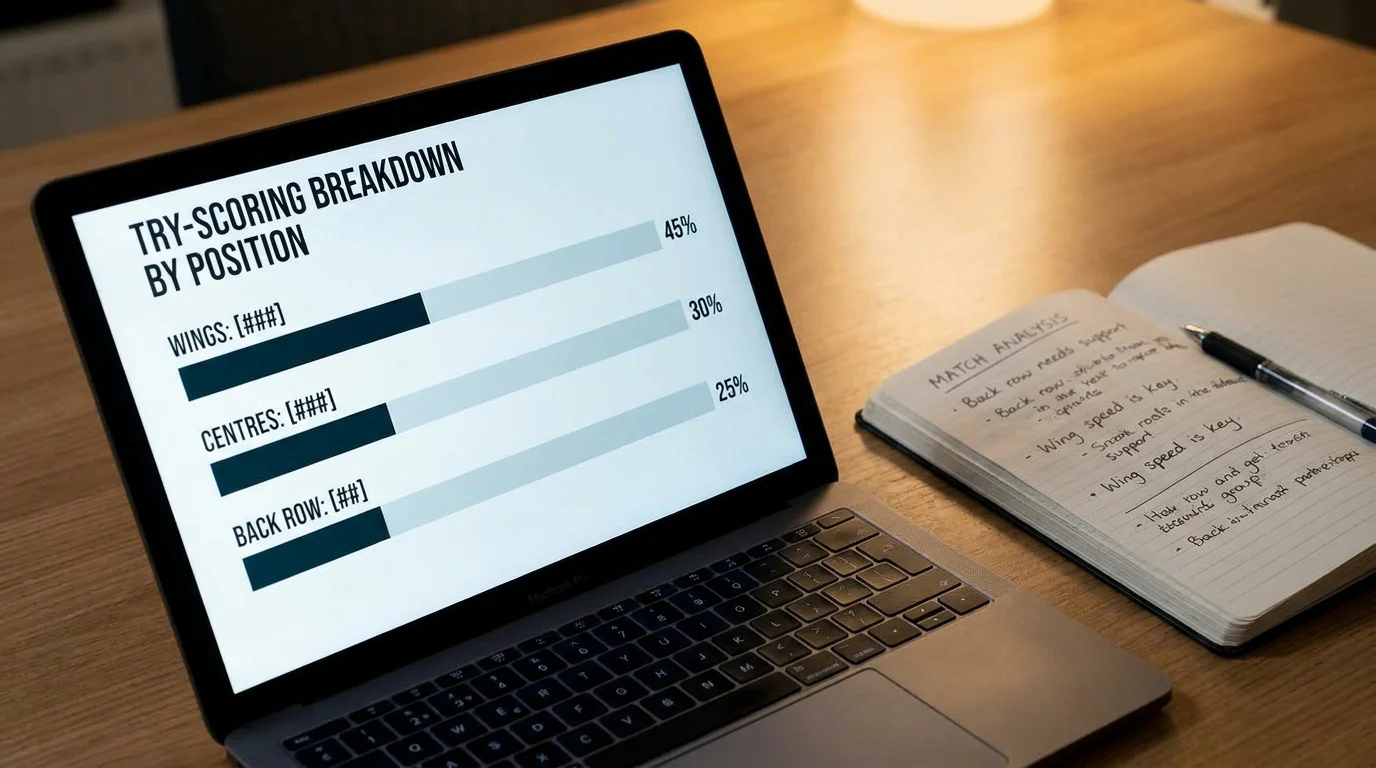
Outright and special markets — championship winner, Grand Slam, top try scorer for the tournament — deserve their own treatment, which I cover below. The point here is that your Six Nations portfolio should not be 100% match-winner bets. Spread across handicaps, totals and anytime tryscorer, and you will find more value per round than you would by simply picking who you think will win each fixture.
Assessing Form: Points Scored, Conceded and Margins
Three years ago I completely overhauled how I assess team form for the Six Nations, and the single biggest change was this: I stopped looking at win-loss records and started looking at scoring margins. A team that wins three matches by 3, 5 and 2 points is in a fundamentally different position from one that wins two and loses one but has margins of +25, +18 and -4. The second team is more dominant; they just had one bad day. Margins tell you about performance level. Results tell you about luck.
The 2025 Six Nations gave us a masterclass in why this matters. France topped the scoring charts with 218 points across their five matches. Ireland, the defending champions at the time, managed 135. Italy conceded 188 points. Those raw numbers immediately tell you something about the relative attacking firepower and defensive resilience of each side, but raw totals are only the starting point. What I do is break them into per-match averages and then separate home from away, because the Six Nations home advantage is significant enough to distort any aggregate figure.
Points scored per match gives you a baseline for over/under betting. If France averaged 43.6 points per match in 2025 and their opponent averages conceding 37.6, the combined expected total is roughly 81 — which is obviously higher than any bookmaker’s totals line would sit. The adjustment comes from understanding that teams play differently against each other than they do against the bottom half of the table. France scoring 50 against Italy tells you less about their likely output against Ireland than their 28 against England does. Strip out the outlier fixtures and recalculate, and the expected total drops significantly. Bookmakers do this exercise too, but they do it with models rather than matchup context, and models miss tactical wrinkles that game-film analysis can reveal.

Points conceded is where form assessment gets genuinely predictive. A team’s defensive record over its last three Six Nations matches — not three calendar months, three Six Nations matches specifically — correlates with its next defensive performance more reliably than almost any other metric I track. The reason is tactical continuity: international sides spend far less time together than club sides, so their defensive structures tend to change slowly. If a team was leaking tries from lineout drives last March, they are likely still vulnerable there unless there has been a visible coaching intervention.
Margin of victory is the stat that feeds directly into handicap betting. The Smart Betting Club rated one rugby-focused service at a 10.54% ROI across 485 bets over a twelve-month period, and the core of that approach was identifying where bookmaker handicap lines diverged from historical margin data. I do not have access to their full model, but the principle is sound and replicable with public data. Take each team’s average winning margin and average losing margin over their last two Six Nations campaigns, weight recent results slightly more heavily, and compare the output to the bookmaker’s handicap line. If the discrepancy exceeds three points, there is a bet worth investigating.
One trap to watch for: do not overweight the most recent match. If England lose by 20 in Round 3, the market tends to overcorrect in Round 4, offering generous odds on England’s opponent. But a 20-point loss in one fixture often reflects a red card, an early injury to a key player or a freak refereeing decision rather than a genuine collapse in form. I always check the match context before adjusting my form assessment — the scoreline alone is never enough.
Grand Slam and Outright Winner Bets: When to Strike
I placed my best-ever Six Nations outright bet on a Wednesday evening in November, three months before the tournament started. The odds have never been that generous since. Timing is everything with outright markets, and most bettors get it wrong by waiting until the week before Round 1, when the prices have already been hammered by public money.
Outright winner markets for the Six Nations typically open shortly after the autumn internationals conclude in late November. At that point, the bookmakers have fresh performance data from the November Tests but are still months away from knowing squad fitness, coaching changes or Six Nations-specific preparations. The prices are wide because the uncertainty is high — and wide prices are where outright value lives. A team priced at 5.00 in November might be 3.50 by February once they announce a clean bill of health for their first-choice squad. That 30% price compression is profit you leave on the table by waiting.

Grand Slam betting is a subset of the outright market but with a crucial structural difference: it is a binary proposition. A team either wins all five matches or they do not. The implied probability of a Grand Slam is always lower than the probability of winning the championship, because you can win the title with one defeat but you cannot win the Slam. This makes Grand Slam odds more volatile — one upset result in Round 1 eliminates a team entirely, and the money flows to the remaining contenders. If you back a Grand Slam before the tournament and your team loses in Round 2, you are done. No hedge, no partial return. That binary risk means you should stake Grand Slam bets at a fraction of your normal outright stake — I use 25-30% of my standard unit.
The Six Nations prize fund reached GBP 18 million in 2025, with Guinness paying GBP 15 million annually for title sponsorship. That commercial investment means the tournament’s profile is growing, and growing profile means growing betting volume. More volume creates thicker markets on outrights, which in turn makes the odds slightly more efficient. The window for genuine outright value is narrowing year on year as the market matures, which is precisely why early-season positioning matters more now than it did five years ago.
My outright approach is simple: identify two or three realistic contenders in November, place small outright stakes at the longest available price, and then manage exposure through the tournament by hedging in individual match markets if one of my selections reaches Round 4 unbeaten. The hedge does not need to be precise — I am just reducing variance, not locking in a guaranteed profit. Autumn internationals form is the starting point for this analysis, and I weight it heavily in years when the November Tests feature Six Nations opponents playing each other.
Media Rights Deals and Their Effect on Market Depth
The Six Nations is one of the few rugby properties where media-rights revenue directly affects the quality of betting markets available to punters. The $135.24 million in media revenue generated by the 2025 tournament funds production quality, analysis programming and promotional partnerships that feed directly into betting engagement. When a tournament commands that level of broadcast investment, bookmakers respond by deploying their most sophisticated pricing teams and their widest market menus.
The commercial mechanism is worth understanding. Broadcasters pay for rights based on expected viewership. High viewership attracts advertising spend, including from gambling operators. That advertising drives account sign-ups and betting volume around specific fixtures. Higher volume means bookmakers can afford to offer tighter margins on headline markets — because they make their profit from turnover, not from the margin on any single bet. The chain runs from media rights revenue to advertising to sign-ups to volume to tighter odds. Every link benefits the informed bettor who knows where to look.
Rights values also signal which fixtures will attract the deepest markets in future seasons. The expansion of ITV’s Six Nations portfolio for the 2026-2029 cycle — paying a premium for England fixtures — tells you that Saturday evening matches on ITV will carry the most competitive pricing for at least the next three years. Planning your Six Nations betting calendar around those fixtures is not just convenient; it is strategically optimal because the pricing environment is most favourable when the audience and the commercial intensity peak together.
As digital audiences grow and streaming consumption overtakes traditional linear viewing, the next frontier is integrated betting within the broadcast experience itself. The direction of travel points toward a Six Nations where in-play markets are deeper, settlement is faster and the boundary between watching and betting becomes almost seamless. For punters who invest in understanding live markets now, that evolution represents a significant head start.
Frequently Asked Questions
When do Six Nations betting markets usually open each year?
Outright winner and Grand Slam markets typically open within days of the autumn internationals finishing in late November, sometimes earlier at the larger operators. Individual match markets usually appear six to eight weeks before Round 1, with full market depth — handicaps, totals, try scorers — going live around two weeks before kick-off. The earliest prices tend to offer the best value because bookmakers widen their margins to compensate for uncertainty, and those wider margins mean more room for mispricing.
How does the bonus-point system affect Six Nations outright betting?
The bonus-point system awards an extra league point for scoring four or more tries in a match and another for losing by seven points or fewer. This means outright betting is not purely about wins and losses — it is about how teams win and how narrowly they lose. A side that picks up bonus points in defeat can finish above a team with a better win-loss record. When assessing outright markets, factor in each team’s historical try-scoring rate and their tendency to stay competitive in losses, because those bonus points regularly decide the final standings.
Which Six Nations round historically offers the best value for accumulators?
Round 5, often called Super Saturday, tends to produce the most exploitable accumulator opportunities. Multiple matches kick off simultaneously or in quick succession with championship positions still undecided, creating correlated outcomes that bookmakers find difficult to price accurately. Teams chasing bonus points, points difference or the title itself play with unusual aggression, which inflates scoring and makes totals-based accumulators particularly viable. Rounds 1 and 2 are the worst for accumulators because the high uncertainty makes every leg unreliable.
How do broadcast schedules influence live betting volumes during Six Nations?
Broadcast schedules have a measurable impact. Matches shown on ITV draw larger audiences and more betting activity due to gambling advertising during commercial breaks, which spikes sign-ups and in-play engagement. BBC fixtures attract slightly fewer casual bettors but often feature softer in-play odds as a result. The growth of streaming on platforms like ITVX is also pushing more betting volume into live markets, since mobile viewers can toggle between the match stream and their betting app with minimal friction.
Prepared by the Rugby Betting Tips editorial staff.